
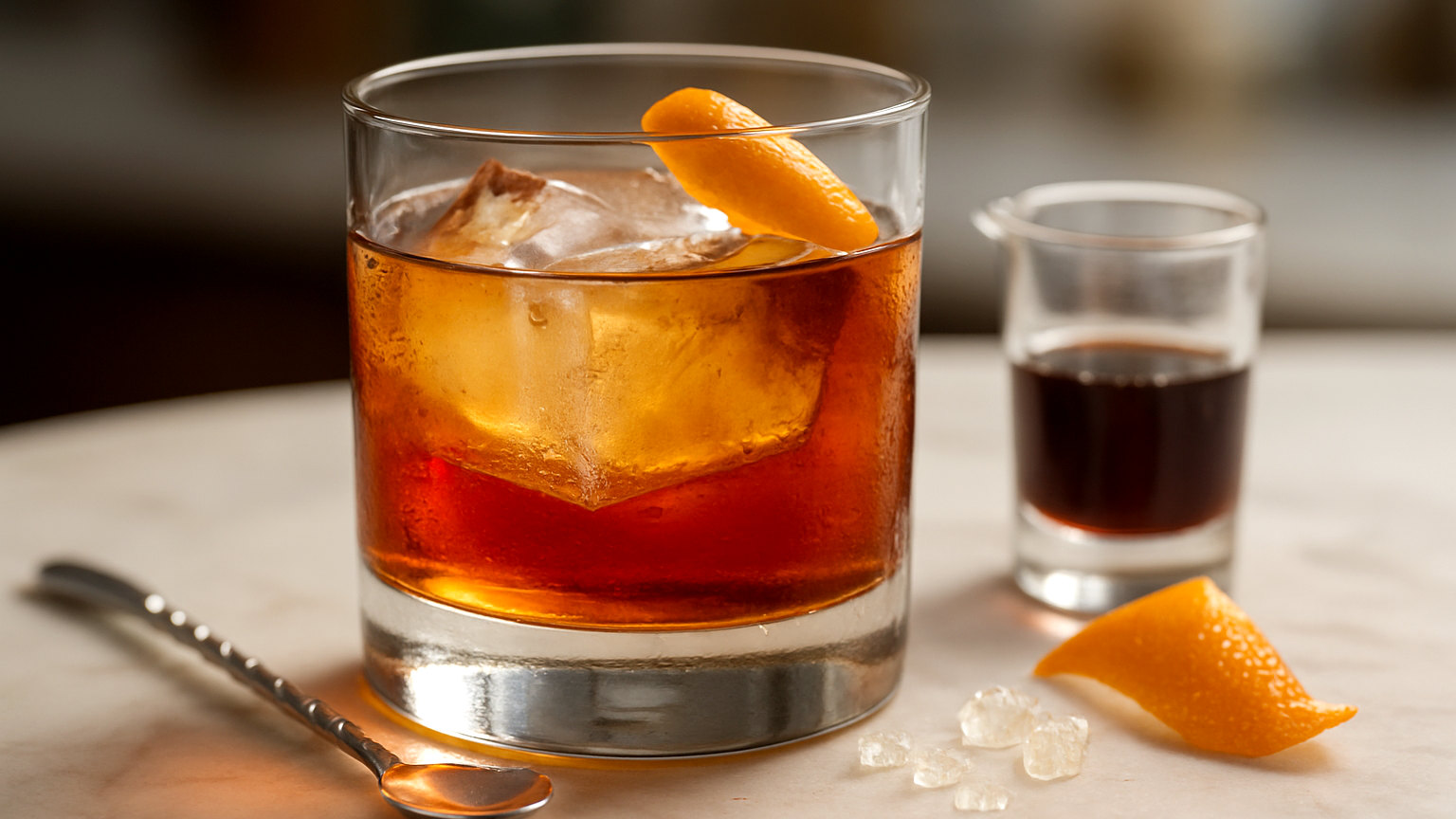
Rich syrup is simple syrup made with two parts sugar to one part water instead of equal parts. That single change does three useful things at once: it thickens the syrup, it makes it keep far longer, and it means less water goes into a drink that was already going to be diluted by ice.
How do you make it?
Two hundred grams of sugar to 100ml of water. The cold shake method struggles at this concentration, so use gentle heat: warm the water, add the sugar, and stir until it runs completely clear.
Do not boil. Boiling evaporates water and pushes the concentration somewhere you did not intend, which makes the syrup inconsistent between batches.
Why does it give a drink more body?
Because it is more viscous. Sugar in solution thickens liquid, and a drink made with rich syrup feels heavier in the mouth than the same drink made with simple syrup at equivalent sweetness.
That matters most where a drink is already thin. Alcohol-free drinks, low-strength drinks and anything built on citrus and soda all benefit, because there is nothing else providing weight.
Is it just about sugar content?
No, and this is the point people miss. You use roughly two thirds as much rich syrup for the same sweetness, so the drink ends up with the same sugar and noticeably less water. The texture improves without the drink getting sweeter.
How do you substitute between the two?
As a working conversion, use two thirds the volume. A recipe calling for 20ml of simple syrup wants around 13ml of rich, and one calling for 30ml wants 20ml.
Swapping one for one is the usual mistake and it makes a drink noticeably too sweet. If a cocktail suddenly tastes cloying after you switched syrups, this is why.
How long does it keep?
Around six months refrigerated, against a month for simple syrup. The higher sugar concentration inhibits microbial growth, which is the same principle that preserves jam.
Sterilise the bottle before filling and label it with the date. Rich and simple syrup look identical, and using the wrong one without realising is the most common cause of an unexpectedly sweet drink.
Which drinks suit it best?
- Anything with rum. The extra body suits daiquiris and tiki drinks.
- Alcohol-free drinks. Where thinness is the main fault.
- Long drinks over ice. Where a lot of dilution is coming.
- Batched cocktails. Less water in the base leaves more room for the dilution you add deliberately.
When should you stick with simple syrup?
In delicate, spirit-forward drinks served up, where you want sweetness without weight. A martini variation or a light gin sour can feel heavy with rich syrup.
It is also easier to measure small quantities of simple syrup accurately, since 13ml of a thick syrup is harder to pour precisely than 20ml of a thin one. For most people the practical answer is to keep simple syrup as the default and rich syrup for the drinks that want it.
Can you go richer still?
Three parts sugar to one part water is possible and it approaches the saturation point of sugar in water. It keeps almost indefinitely and it is genuinely difficult to measure and pour, particularly when cold.
Two to one is the practical maximum for a home bar. Beyond that the handling problems outweigh the benefits, and the syrup starts to crystallise in the neck of the bottle.
What if it crystallises?
Warm the bottle gently in a bowl of hot water and shake. Crystals form when the solution is saturated and the temperature drops, and they redissolve readily with a little heat. Adding a teaspoon of water to the batch prevents it recurring.
Which should you keep as the default?
Simple syrup, with rich as the second bottle once you make drinks often enough to get through both. Most published recipes assume simple, so keeping it as the standard means you can follow a recipe without converting anything.


