
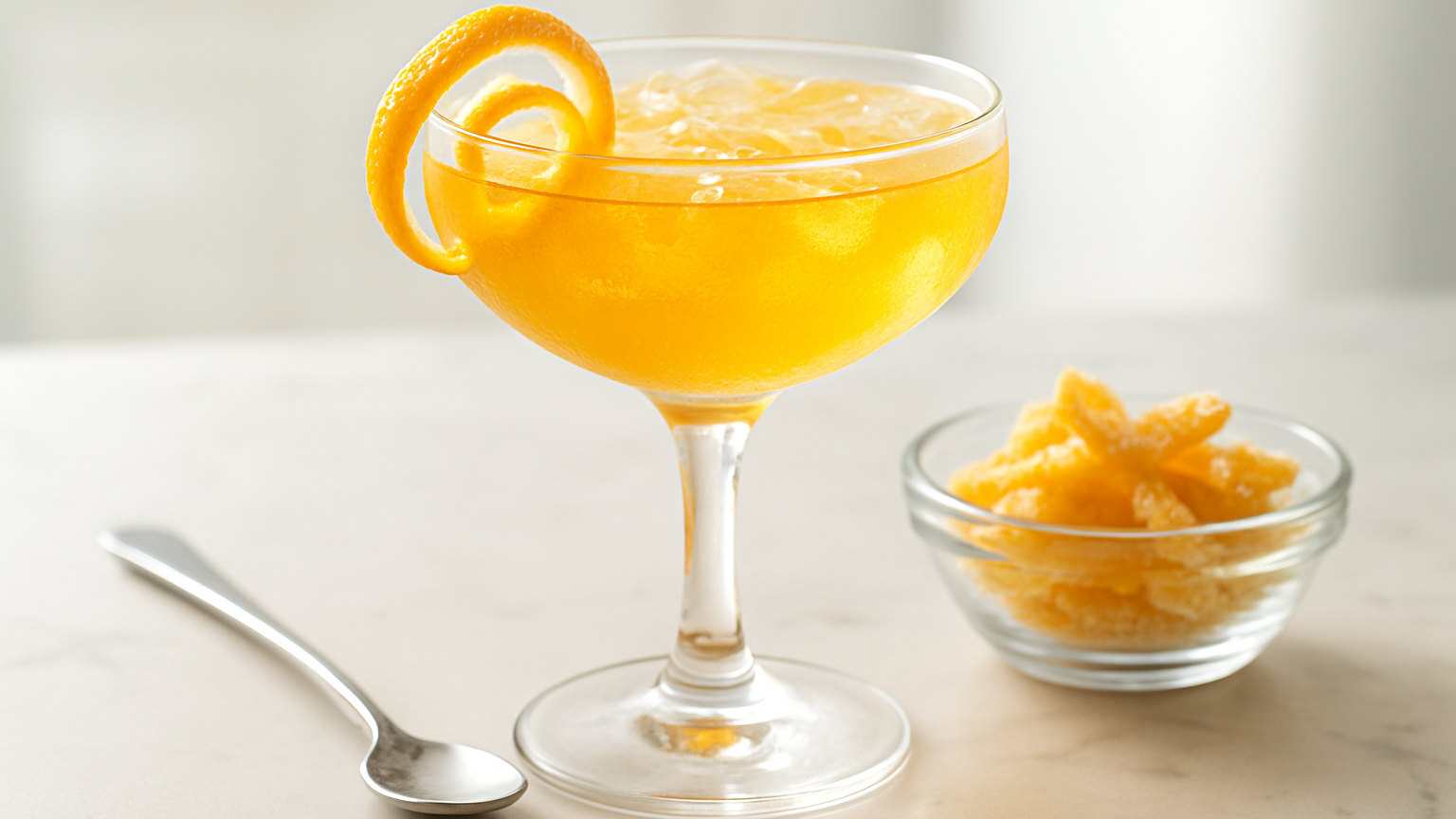
Oleo saccharum means oil sugar, and it is what happens when you leave citrus peel buried in sugar for a few hours. The sugar draws the essential oils out of the peel osmotically and dissolves into them, producing a thick, intensely aromatic syrup that tastes more of citrus than the juice does.
Why is it better than juice?
Because the flavour compounds in citrus are concentrated in the peel, not the flesh. Juice provides acidity and a modest amount of aroma. Peel oil provides the aroma almost entirely, which is why a twist expressed over a drink changes it so noticeably.
Oleo saccharum captures that oil in a form you can measure and store, and it does so from the part of the fruit that usually goes in the bin.
What is the method?
- Peel the citrus with a vegetable peeler, taking as little white pith as possible.
- Put the peels in a bowl or jar with an equal weight of caster sugar.
- Muddle gently or rub the sugar into the peels with your fingers.
- Cover and leave at room temperature for four to twelve hours.
- Stir occasionally. The sugar will become wet and eventually mostly liquid.
- Strain out the peels, pressing to extract everything, and bottle.
The peels of six lemons with around 150g of sugar gives roughly 120ml of syrup, which is enough for a punch serving eight.
Why does the pith matter?
Because it is bitter and it contributes nothing aromatic. A peel with a thick white layer attached will give a syrup with a hard, unpleasant edge. A vegetable peeler naturally takes a thin strip, which is why it works better than a knife.
How long does it take?
Four hours produces a usable syrup. Twelve produces a noticeably better one. Overnight is the practical answer, since you can start it the evening before a party and strain it in the morning.
Warming it gently speeds the process considerably, though gentle heat drives off some of the volatile aromatics you are trying to capture. The slow cold method gives the best result.
Which fruit works?
- Lemon. The traditional choice and the most useful.
- Orange. Sweeter and rounder, good in rum punches.
- Grapefruit. Bitter as well as aromatic, excellent with gin.
- Lime. Works, though lime peel is thinner and gives less oil.
Use unwaxed fruit where you can, since the wax coating on supermarket citrus sits on the peel and ends up in the syrup. If only waxed fruit is available, scrub it thoroughly in warm water first.
What should you use it in?
Punch, above all. The classic formula is one of sour, two of sweet, three of strong, four of weak, and oleo saccharum is the sweet element. It gives a punch a depth of citrus character that syrup and juice alone cannot.
It also works in individual drinks. Replace the simple syrup in a Tom Collins or a whiskey sour with 15ml of lemon oleo and the difference is immediate.
How long does it keep?
Around two weeks refrigerated in a sealed bottle. It is a high-sugar syrup, which helps, but it contains no preservative and the oils will eventually oxidise and dull.
Make it for a specific occasion rather than as a standing item. The whole appeal is freshness, and a bottle sitting for a month has lost the brightness that made it worth doing.
What do you do with the leftover fruit?
Juice it. Peeling first and juicing afterwards means one lemon gives you both the oleo and the acid for the same punch, which is the neatest thing about the technique. Nothing is wasted.
How much does one lemon produce?
Roughly 20ml of finished syrup per lemon, so six lemons gives enough for a punch serving eight or for eight individual drinks. Plan the quantity around the occasion rather than making a standing batch.
Does it work with sugar substitutes?
Poorly. The extraction relies on osmosis, which depends on the sugar concentration drawing moisture and oil out of the peel. Most substitutes are used in tiny quantities by weight and simply cannot do that work.


