
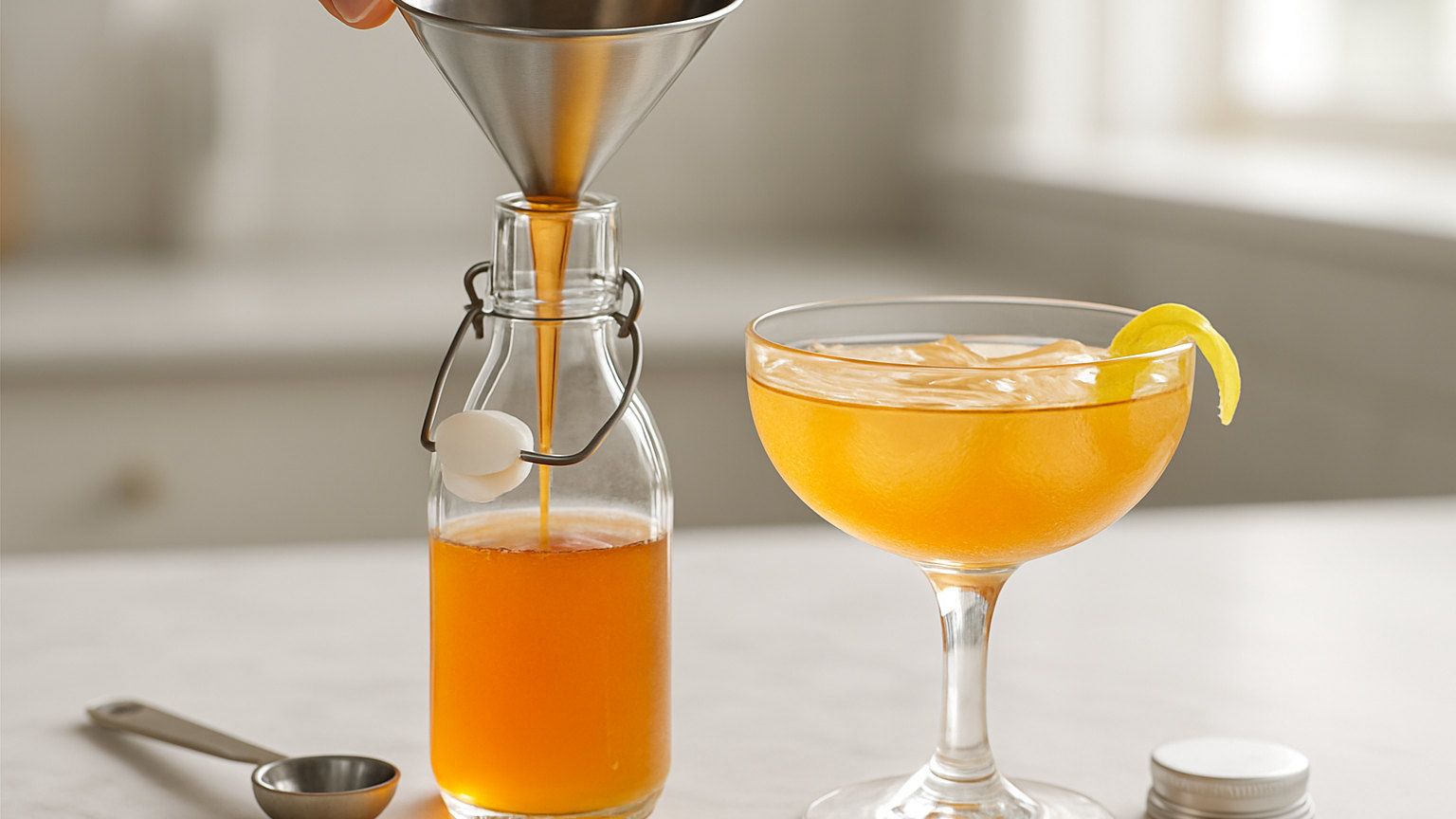
A syrup that grows a fuzzy island on the surface after ten days was almost certainly contaminated when it went into the bottle. Sugar solutions are a good growth medium at ordinary concentrations, and the difference between a syrup lasting a fortnight and one lasting six months comes down to three controllable things.
What actually causes it?
Mould spores and yeast, which are present everywhere in a kitchen and land in anything left open. Once in a nutrient-rich sugar solution at room temperature they multiply readily.
A syrup that has fermented rather than moulded will smell faintly of alcohol and may fizz slightly. That is wild yeast doing what yeast does. Neither is worth trying to rescue.
How does sugar concentration help?
By osmosis. At high enough concentrations, sugar draws water out of microbial cells faster than they can cope with, which is the principle behind jam and honey keeping without refrigeration.
- Simple syrup, one to one: around a month refrigerated.
- Rich syrup, two to one: around six months refrigerated.
That is a substantial difference for a change that costs nothing. If you find yourself throwing syrup away regularly, switching to a rich ratio is the first thing to try.
Does it change the drink?
Yes, so adjust for it. Rich syrup is roughly one and a half times as sweet by volume, so use two thirds as much. Swapping one for one is why a drink suddenly tastes cloying after a change of syrup.
How should you sterilise the bottle?
Washing is not sterilising. Rinse the bottle with boiling water and let it drain upside down, or use a brewing sanitiser diluted according to the instructions and drain without rinsing.
Do the cap and any pourer as well. A clean bottle with a contaminated cap is a contaminated bottle, and pourers in particular hold dried sugar that harbours everything.
Does adding alcohol work?
Very well. Fifteen millilitres of a neutral spirit per 300ml of syrup extends the life by several weeks and is entirely undetectable in a finished drink.
Vodka is the usual choice since it adds no flavour. For a demerara or spiced syrup, a light rum works and contributes something. Worth noting on the label if you serve drinks to anyone avoiding alcohol completely, since it becomes a source they would not expect.
What are the other habits?
- Refrigerate always. Room temperature roughly halves the life of any syrup.
- Never return a used spoon or jigger to the bottle. Pour out what you need.
- Make small batches. 300ml is fifteen drinks and there is little point making more.
- Label with the date. Guessing how old a bottle is leads to using it too long.
Which syrups spoil fastest?
Anything containing fresh ingredients rather than dried. Ginger syrup, herb syrups, fruit syrups and anything with citrus juice in it are all shorter lived than a plain or spiced syrup, because fresh material brings moisture and microbial load.
Orgeat and falernum, which contain nut solids, are shorter lived still and want using within a few weeks.
How do you tell it has gone?
- Visible mould, in any quantity.
- Cloudiness that was not there before.
- Floating specks or strands.
- A yeasty, alcoholic or sour smell.
- Fizzing or pressure when the cap comes off.
Do not scoop mould off the top and use the rest. Mould grows a network below the visible surface, and in a liquid it will have spread throughout. Discard the lot and sterilise the bottle before reusing it.
Can you freeze syrup instead?
Yes, and it is the best answer for anything you use rarely. Pour into an ice cube tray, freeze, then transfer to a bag. Each cube is roughly 20ml, which is close to a single measure, and it keeps for months without any preservative at all.
What should the bottle be?
Glass rather than plastic, with a tight cap. Plastic scratches, and scratches harbour material that survives rinsing. A squeezy bottle is convenient for pouring and worth replacing periodically for the same reason.


