
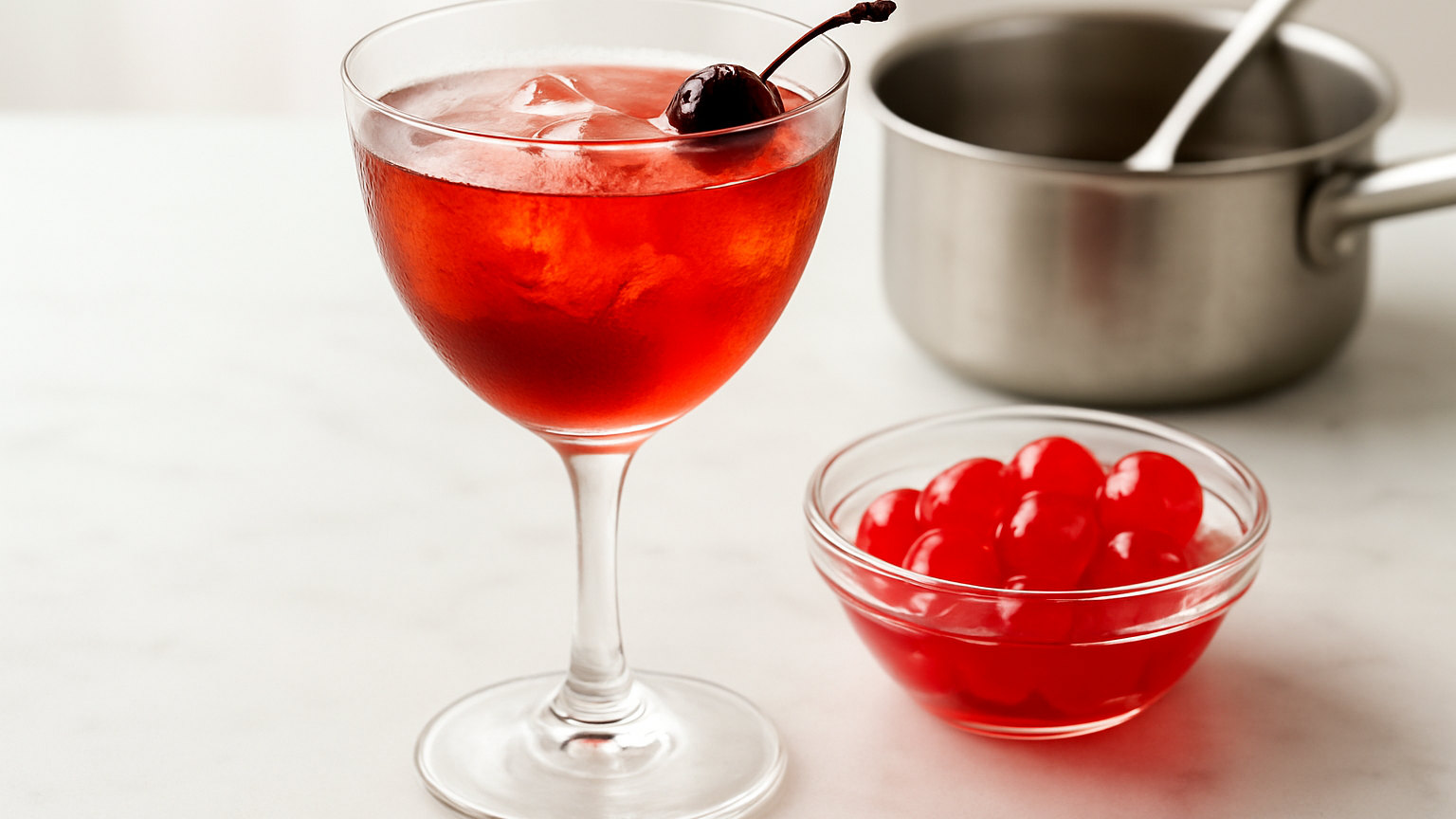
A good cocktail cherry is one of the few small upgrades in home bartending that changes a drink noticeably. The bright red glace cherry sold for baking is mostly sugar, brine and artificial colour, and it contributes a sweet slick and nothing else. A properly preserved cherry brings stone fruit and a faint almond note as you reach the bottom of a Manhattan.
What is the difference?
Glace cherries are bleached in brine, then soaked in sugar syrup with colouring and often almond flavouring. The original fruit character is deliberately stripped out and replaced.
Cocktail cherries in the older sense are simply cherries preserved in syrup, usually with maraschino liqueur, spices and sometimes a little acid. They stay dark, they taste of cherry, and the syrup they sit in is itself useful.
What do you need?
- 400g cherries, fresh and stoned, or frozen and thawed
- 200ml maraschino liqueur
- 100ml water
- 150g caster sugar
- 1 cinnamon stick
- A strip of lemon peel
- 2 dashes Angostura bitters
Frozen cherries work well and are available year round. They soften more than fresh ones during preservation, which some people prefer and others do not.
What is the method?
- Combine the water, sugar, cinnamon and lemon peel in a pan and heat gently until dissolved.
- Add the cherries and simmer very gently for five minutes. Do not boil hard or they collapse.
- Take off the heat and leave to cool completely in the syrup.
- Stir in the maraschino liqueur and the bitters once cool.
- Transfer to a sterilised jar, ensuring the cherries are fully submerged.
- Refrigerate for at least a week before using.
Adding the liqueur after cooling matters. Simmering it drives off the alcohol and most of the aroma you paid for.
Do the stones need removing?
Yes, and do not crush them. Cherry stones contain compounds that release cyanide when broken down, which is why crushing them is not a shortcut worth taking. A cherry stoner makes short work of it, and the pointed end of a piping nozzle or a sturdy straw both work.
Can you make them without maraschino?
Yes. Substitute brandy, bourbon or dark rum for a different character, or leave the alcohol out entirely and use an extra 100ml of syrup with a splash of lemon juice.
The alcohol-free version keeps for around three weeks rather than six months, since the spirit is doing preservative work as well as flavouring. Label the jar either way, since a cherry does not look like something containing alcohol and someone avoiding it entirely would want to know.
How long do they keep?
Around six months refrigerated in a sterilised sealed jar with the alcohol, provided the fruit stays submerged. Any cherry sitting above the syrup line will spoil and take the jar with it.
Discard the lot at any sign of mould, cloudiness that was not there before, or fizzing when the jar opens.
What do you do with the syrup?
It is a genuinely good ingredient. Use it in place of some of the sweetener in a whiskey sour or a Manhattan, or over ice cream. It carries the cherry, the spice and the maraschino, and throwing it away when the fruit runs out is a waste.
Which drinks want one?
The Manhattan above all, where the cherry sits in the base and slowly flavours the last mouthfuls. Also an old fashioned, a whiskey sour, and any tiki drink calling for a cherry. In a Manhattan it is not decoration, since the drink is built around the assumption that something is sitting at the bottom of the glass.
When are cherries in season?
June to August in the UK, which is when fresh fruit is worth using and cheapest. Frozen cherries are available year round and work well enough that there is no reason to wait if you want a jar in December.
One batch from 400g of fruit fills a large jar and lasts most households a year, since a single cherry per drink goes a long way.


