
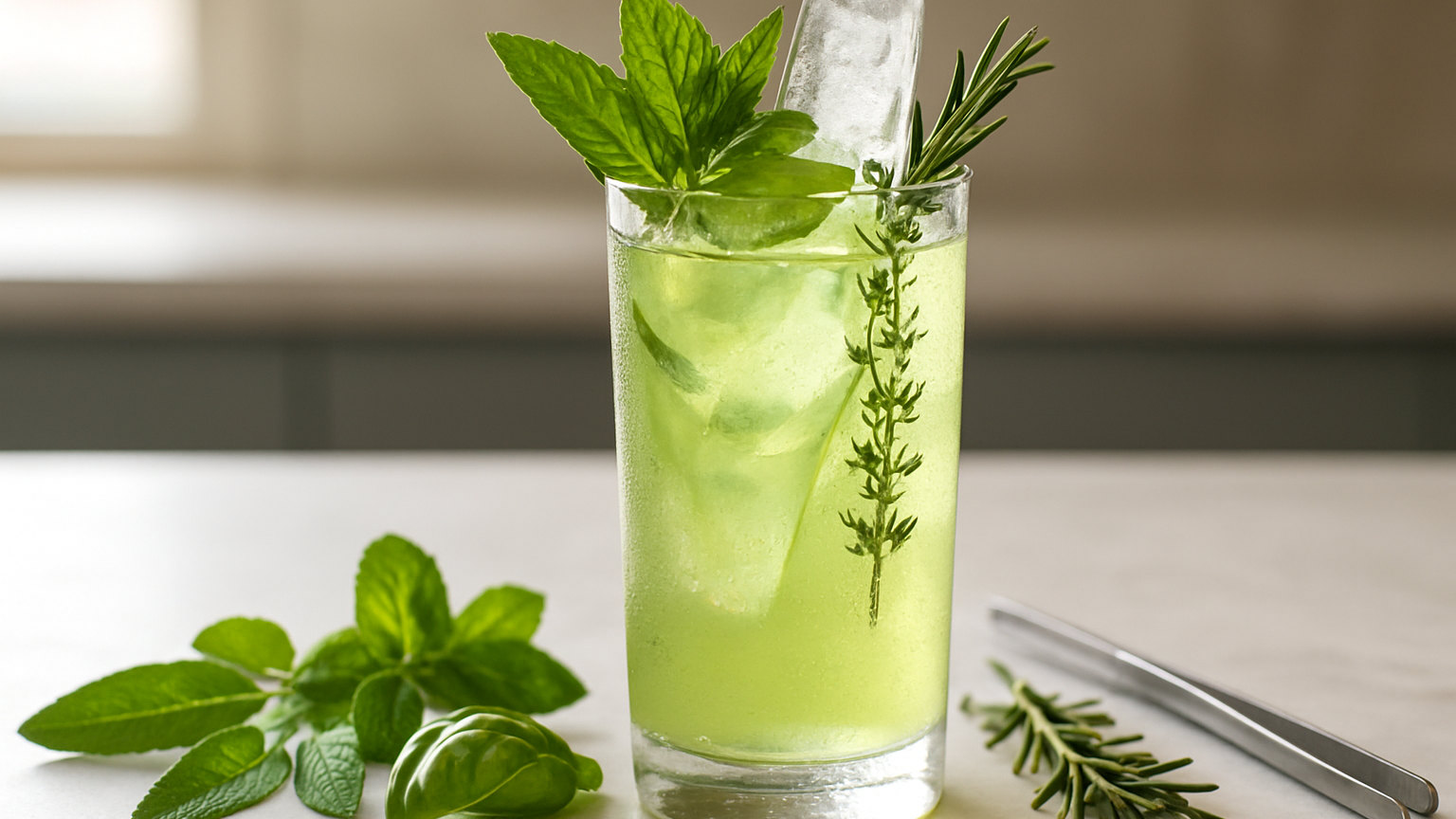
A herb sprig sits a few centimetres from your nose for the length of a drink, which makes it one of the most effective garnishes available. The technique matters more than the choice of herb, and it is the same for all of them: release the oils without damaging the leaf.
How do you release the aroma?
Clap the sprig once between your palms. That single sharp impact ruptures enough surface cells to release the essential oils without breaking the leaf structure.
Do not muddle a garnish sprig. Muddling releases chlorophyll and tannins as well as oils, which is bitter and grassy, and it leaves the herb looking bruised and blackened at the rim.
What about herbs inside the drink?
Different job, and the rule is gentleness. In a mojito, press the mint four or five times with the flat end of a muddler. Correctly treated mint stays green and mostly intact; over-muddled mint is dark and shredded, and by then the bitterness is in the drink and cannot be removed.
Which five work reliably?
- Mint. The most versatile. Mojito, julep, and as a garnish on almost any long drink.
- Rosemary. Piney and robust, so it stands up to gin and whisky. Also good burnt briefly for smoke.
- Basil. Sweet and peppery, excellent with gin and with strawberry.
- Thyme. Subtle and savoury, suits gin and dry drinks.
- Sage. Assertive and slightly medicinal, works with bourbon and apple.
Mint and rosemary are the two to start with, since between them they cover light and heavy drinks and both are hard to kill on a windowsill.
Which spirits do they suit?
- Gin: almost all of them, since gin is already botanical. Basil, thyme and rosemary particularly.
- White rum: mint above all.
- Bourbon: mint for a julep, sage or rosemary for something more savoury.
- Tequila: coriander is unexpected and works, as does basil.
- Vodka: anything, since there is no spirit character to clash with.
Can you use them in syrups?
Yes, and the timing is the whole trick. Add herbs to a syrup off the heat and infuse for twenty minutes only, then strain immediately.
Leaving them longer produces a stewed, vegetal flavour and a murky brown colour. Herb syrups also fade fast, keeping a week or two before the aroma flattens, so make them in small quantities.
How do you keep them alive?
Soft herbs such as mint and basil keep best upright in a glass of water with a plastic bag loosely over the top, in the fridge for mint and at room temperature for basil, which dislikes cold.
Woody herbs such as rosemary and thyme keep for two weeks or more wrapped loosely in slightly damp kitchen paper in the fridge.
Growing them is better than either. Mint, rosemary and thyme are all difficult to kill and a pot on a windowsill supplies a household indefinitely, with the advantage that you pick at the moment of use rather than from something already wilting.
Which do not work?
Coriander divides people sharply, since a genuine proportion of the population perceives it as soapy. Parsley contributes almost nothing aromatically. Dill and tarragon are both strongly savoury and sit oddly in a sweet drink, though tarragon with gin has its advocates.
Dried herbs are not a substitute in any of these roles. The volatile oils that make a fresh sprig worthwhile are largely gone, and dried herbs floating in a glass look like a mistake.
Where should the sprig go?
Close to the rim on the side you drink from, so it is under your nose. A sprig buried in the middle of a tall glass of ice contributes far less, and a mint bouquet on a julep is placed the way it is for exactly this reason.
Should you rinse them first?
Yes, and dry them properly afterwards. A wet sprig dilutes the surface of a drink slightly and sits limply at the rim. Pat them with kitchen paper before use.


