
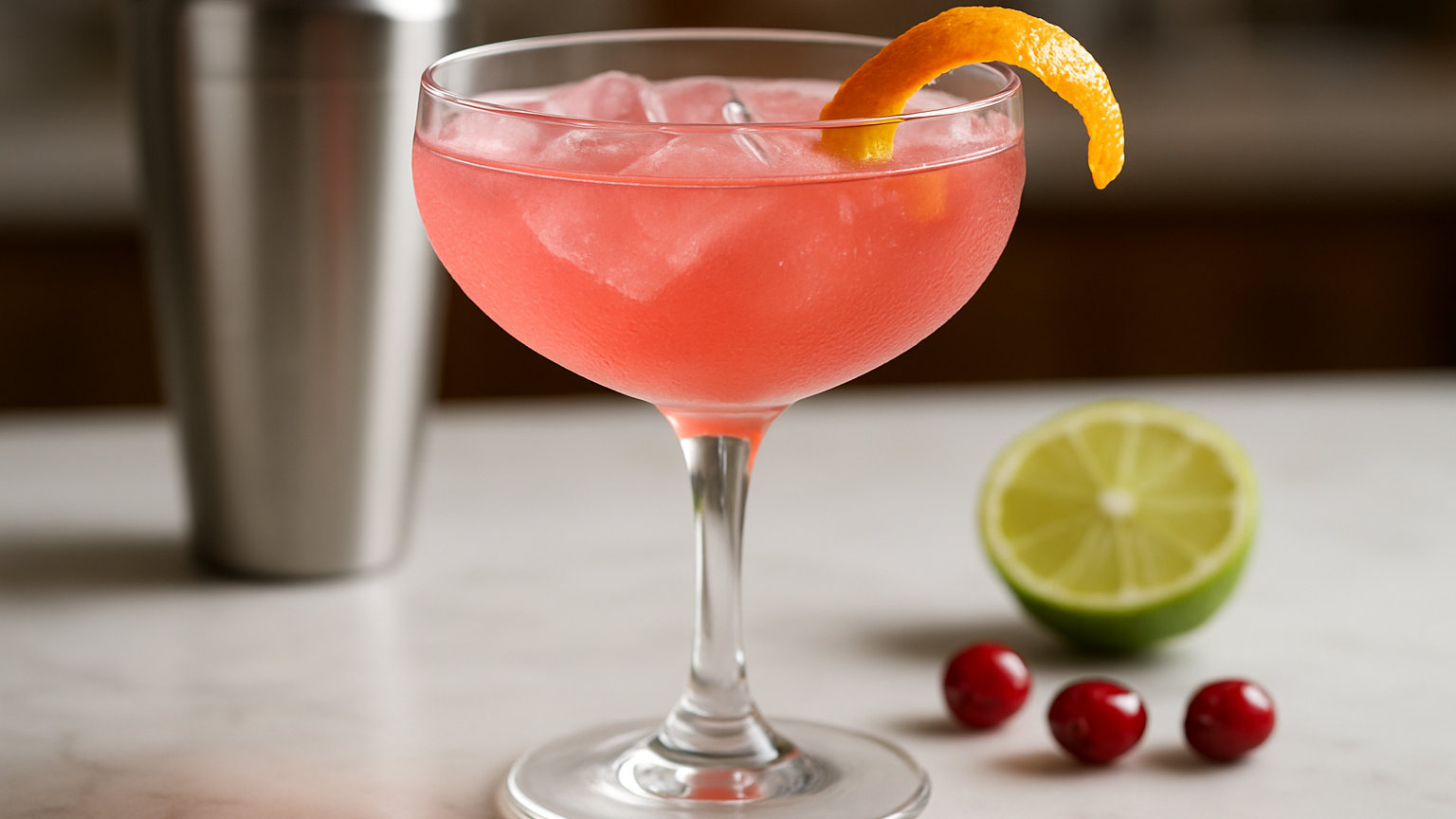
The cosmopolitan spent a decade as the most fashionable drink in the world and then a longer one being quietly mocked, and neither reputation reflects what is actually in the glass. Made to its original specification it is dry, tart and pale coral rather than sweet and bright pink. The version that gave it a bad name was a different drink wearing the same name.
What is the original recipe?
Forty-five millilitres of citrus vodka, 15ml of orange liqueur, 15ml of fresh lime juice and 30ml of cranberry juice, shaken hard with ice and strained into a chilled coupe. In ounces, that is 1.5oz, 0.5oz, 0.5oz and 1oz.
Note how little cranberry there is. It is a colouring and seasoning ingredient rather than the base, and it should be a background note rather than the dominant flavour. Most disappointing cosmopolitans have roughly doubled it.
How has the recipe changed over time?
The version that became famous through the late 1990s was routinely made with sweetened cranberry juice drink, cheap triple sec and bottled lime cordial, all of which pushed it towards sweetness. Volumes crept up as well, so the drink arrived in a large glass, sugary and slightly flat.
The specification above is closer to the drink as it was made in New York in the late 1980s, and it is what most cocktail bars pour today. If your only experience of a cosmopolitan is a sweet one, this will not taste like the same drink.
Does the vodka need to be citrus flavoured?
Traditionally yes, and it does make a difference. Citrus vodka adds a lemon and orange aroma that plain vodka cannot, and it lifts the drink noticeably. Plain vodka works and gives a cleaner, slightly more austere result. Neither is wrong, but if you have citrus vodka this is the drink to use it in.
Which cranberry juice should you buy?
Look for cranberry juice rather than cranberry juice drink, and check the sugar content on the label. Anything above about 10g of sugar per 100ml will make the finished cocktail too sweet no matter how carefully you measure everything else.
Unsweetened pure cranberry juice is available and is extremely tart. If you use it, expect to add around 5ml of simple syrup to bring the drink back into balance. It gives the sharpest and arguably the best version.
Why is it shaken rather than stirred?
Because it contains citrus juice. Every cocktail with fresh juice in it is shaken, since juice and spirit have different densities and will not fully combine with stirring alone. Shaking also aerates the drink slightly, which suits its bright profile.
Shake for around twelve seconds with hard, dry ice, then double strain through a fine sieve. Straining twice matters here because the finished drink is served up and clear, and any ice shards or lime pulp are immediately visible.
When should you flame the orange peel?
The flamed orange twist is the traditional garnish and it is worth the small amount of theatre. Hold a wide strip of orange peel skin side down a few centimetres above the surface, warm it briefly with a lit match, then squeeze so the oils pass through the flame.
The oils ignite momentarily and land on the drink caramelised rather than raw, which gives a warmer, slightly toasted aroma. Be sensible about it: keep it away from anything flammable, and do not attempt it near a full bottle of spirit.
How do you fix one that tastes wrong?
- Too sweet: cut the cranberry to 20ml and check your triple sec is a dry one.
- Too sharp: add 5ml of simple syrup rather than more cranberry.
- Muddy or dull: the lime was not fresh, or the cranberry is a juice drink.
- Too pale or too red: adjust cranberry by 5ml at a time, though colour is not a reliable guide to balance.
Work through those one change at a time rather than adjusting two things at once, or you will not know which correction did the work.


