
Multiplying a cocktail recipe by twenty and pouring it over ice produces something noticeably harsher than the same drink made one at a time. The reason is that shaking and stirring do two jobs, chilling and diluting, and a batch skips the second one entirely. Adding that water deliberately is the whole skill.
How much water should you add?
As a percentage of the total volume of everything else:
- Stirred drinks such as a Manhattan or old fashioned: around 22 per cent.
- Shaken drinks with citrus such as a margarita or daiquiri: around 25 per cent.
- Long drinks topped with soda: none, since the mixer provides it at serving.
For a batch of ten Manhattans that means 600ml whiskey and 300ml vermouth, giving 900ml, plus roughly 200ml of water. Chill thoroughly and pour straight over a large cube.
Why does chilling matter as much as dilution?
A batch poured from a room temperature bottle over ice will melt that ice fast, adding dilution you have already accounted for and ending up watery. A batch straight from the fridge or freezer melts far less.
Spirit-only batches at high alcohol can go in the freezer without freezing solid and are excellent poured neat over one cube. Batches containing citrus juice should stay in the fridge, since juice will freeze.
Which cocktails batch well and which do not?
The reliable ones are stirred and spirit-forward: Manhattans, negronis, old fashioneds, boulevardiers. They hold for days and improve slightly as the ingredients settle together.
Citrus drinks batch acceptably but not indefinitely. Fresh lemon and lime juice begins to lose its brightness within about four hours and tastes noticeably dull by the next day. Batch these on the day and keep them cold.
Anything with egg white, cream or heavy foam cannot be batched. The texture is created at the moment of shaking and there is no way to store it.
What about drinks with soda or sparkling wine?
Batch everything except the fizzy element, then top each glass at serving. Carbonation will not survive in a jug for more than a few minutes, and a pre-mixed sparkling punch is flat by the time the second person is served.
How far ahead can you make them?
Spirit-only batches can be made a week ahead and are genuinely better for a day or two of rest. Citrus batches should be made the same day, ideally within four hours of serving. Anything containing dairy or fresh purée should be made immediately before.
How much should you actually make?
A reasonable planning figure is two drinks per person for the first hour and one per hour after that, for an event with food. That is a guide rather than a rule, and it is better to over-cater on mixers and ice than on spirits, since leftover spirit keeps and leftover mixed cocktail does not.
Be aware that batched drinks are easy to drink quickly, particularly when they are cold and pre-diluted. Pouring into smaller glasses and keeping water visibly available makes a real difference to how an evening goes.
How should you serve a batch?
Bottles work better than a punch bowl for spirit-forward drinks. Sterilised swing-top bottles keep the batch cold in the fridge, pour cleanly, and stop the whole thing warming up on a table.
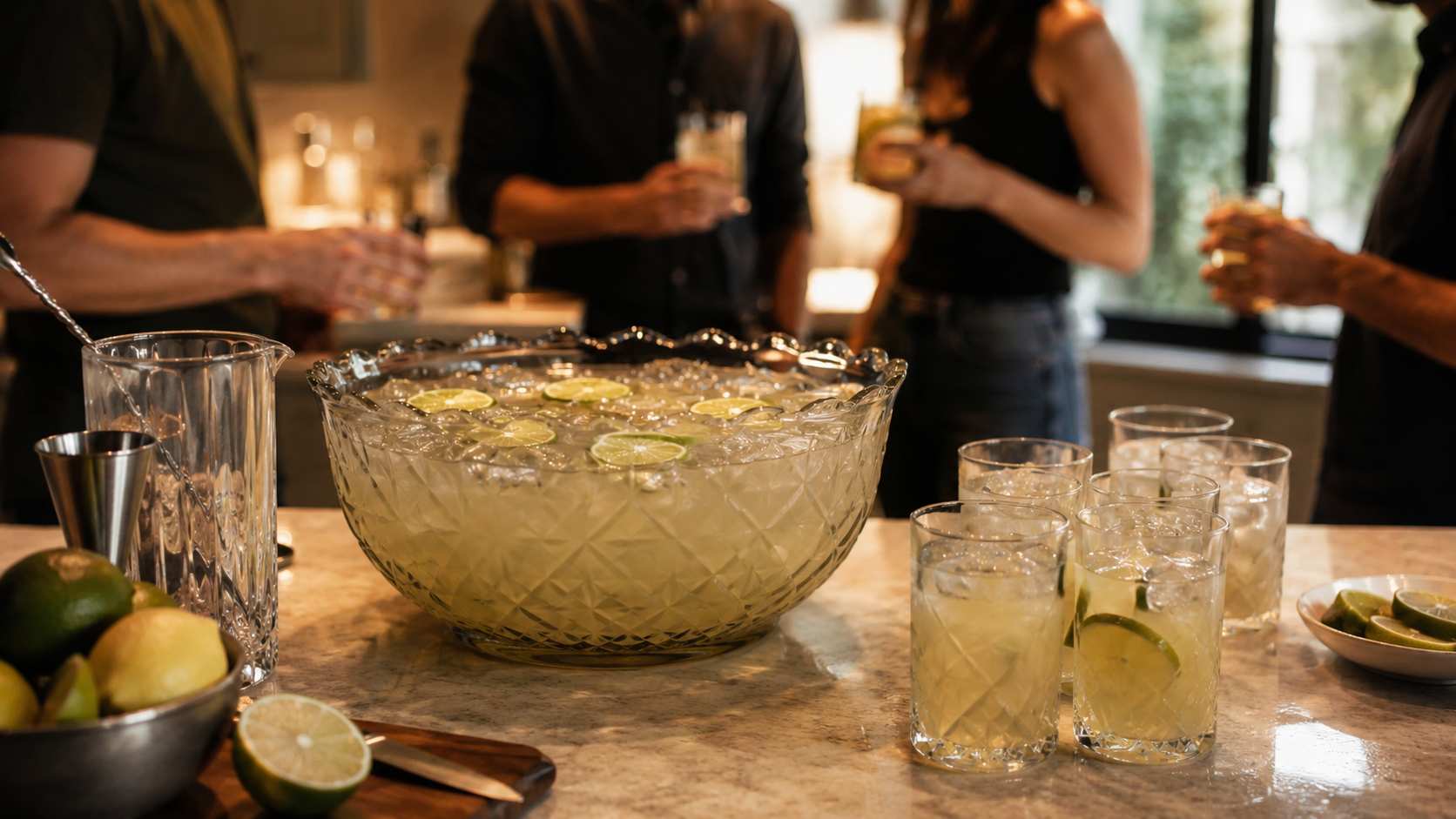
For a punch, use one very large block of ice rather than cubes. A single block has far less surface area relative to its volume and melts many times more slowly, so the bowl stays cold without turning to water. Freeze water in a plastic container the day before.
What should you label?
More than you think. Write the drink, the date it was mixed and whether it contains alcohol on every bottle, because a batched Manhattan and a batched alcohol-free equivalent look identical in the fridge. Guests will also want to know what they are pouring, and a label removes the need for you to stand next to the drinks explaining them all evening.


