
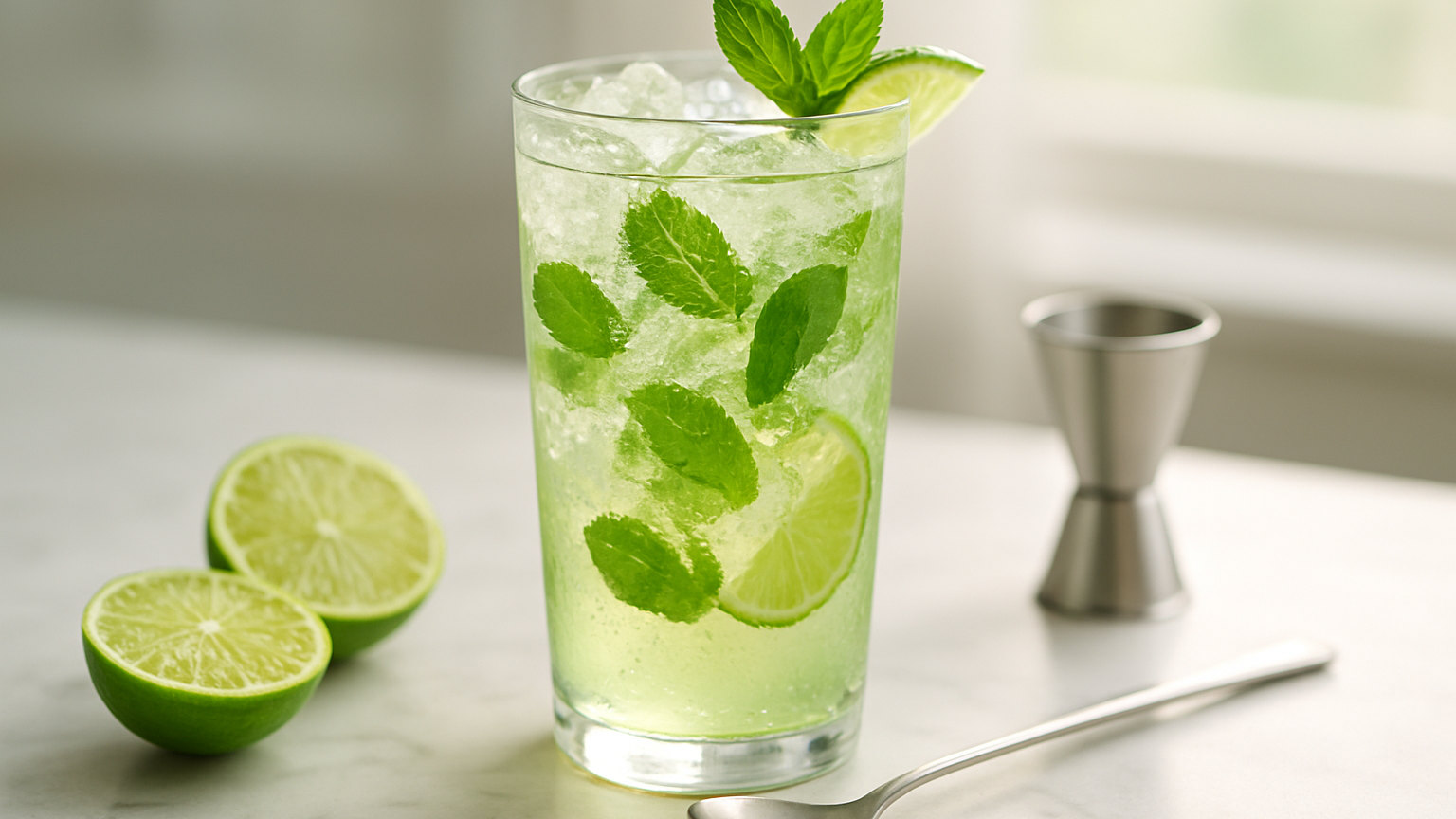
A bitter mojito is a bruised mojito. Mint leaves contain chlorophyll and tannins in the leaf structure, and grinding them against the bottom of a glass releases both. What should be a bright, aromatic drink turns green, grassy and faintly astringent. The fix takes no extra time and no extra equipment.
What are the correct mojito measures?
Sixty millilitres of white rum, 25ml of fresh lime juice, 20ml of simple syrup, ten to twelve mint leaves and roughly 60ml of soda water, built over crushed ice in a tall glass. In ounces that is 2oz rum, 0.75oz lime and a generous bar spoon of syrup.
The soda is added last and to taste. A mojito is a long drink and the exact volume depends on your glass, so pour until it looks right rather than measuring.
How should you handle the mint?
Press, do not grind. Put the leaves in the base of the glass with the syrup, and push down gently four or five times with the flat end of a muddler or the handle of a wooden spoon. You want to bruise the surface enough to release the essential oils and no further.
The test is visual. Correctly treated mint stays green and mostly intact. Over-muddled mint is dark, shredded and stuck to the sides of the glass, and by that point the bitterness is already in the drink and cannot be removed.
Should you slap the mint instead?
For the garnish sprig, yes. Clap it once between your palms and the aroma releases without any damage to the leaf. That sprig sits at the top of the glass, right under your nose, and it does most of the aromatic work in the finished drink. The muddled leaves are more about flavour in the liquid.
Why does crushed ice matter?
Crushed ice chills faster and dilutes faster than cubes, and a mojito is built to be diluted. It is also what lets the drink stay cold as you work through it, since a tall glass takes longer to drink than a coupe.
You do not need a machine. Put cubes in a clean tea towel, fold it over, and hit it with a rolling pin. Uneven pieces are fine and arguably better, because the larger fragments melt more slowly and keep the last third of the drink from going watery.
Which rum works best?
Light Cuban-style white rum is traditional and suits the drink well, since it is dry and clean enough to let the mint and lime through. Anything at 40 per cent works.
Aged rum makes a rounder, sweeter version that is worth trying once, though the oak tends to sit oddly against fresh mint. Spiced rum generally does not work, because the vanilla and cinnamon fight the mint rather than complementing it.
How do you make mojitos for a crowd?
Muddling ten drinks individually is miserable, and the results will vary. The better approach is a mint syrup made ahead:
- Heat 200g sugar with 200ml water until dissolved, then remove from the heat.
- Add a large handful of mint, cover, and leave for twenty minutes.
- Strain and refrigerate. It keeps for about two weeks.
Then build each drink with 60ml rum, 25ml lime and 25ml mint syrup over crushed ice, top with soda and garnish with a fresh sprig. The aroma comes from the garnish, the flavour from the syrup, and nothing gets bruised.
When does a mojito go wrong other than the mint?
Two other faults come up regularly. The first is flat soda, which leaves the drink limp. Open a fresh bottle or use small cans, since a large bottle loses its carbonation within a day or two of opening.
The second is stirring too vigorously after the soda goes in. That knocks the bubbles out immediately. Give it one gentle lift from the bottom with a bar spoon to distribute the syrup, and stop there.
Which variations are worth making?
Swapping the lime for a mix of lime and grapefruit gives a slightly more bitter, more grown-up version. Adding four or five raspberries at the muddling stage makes a fruit mojito without needing a flavoured syrup. Replacing the rum with soda water entirely gives a genuinely good alcohol-free version, since the mint and lime were always doing most of the work.


