
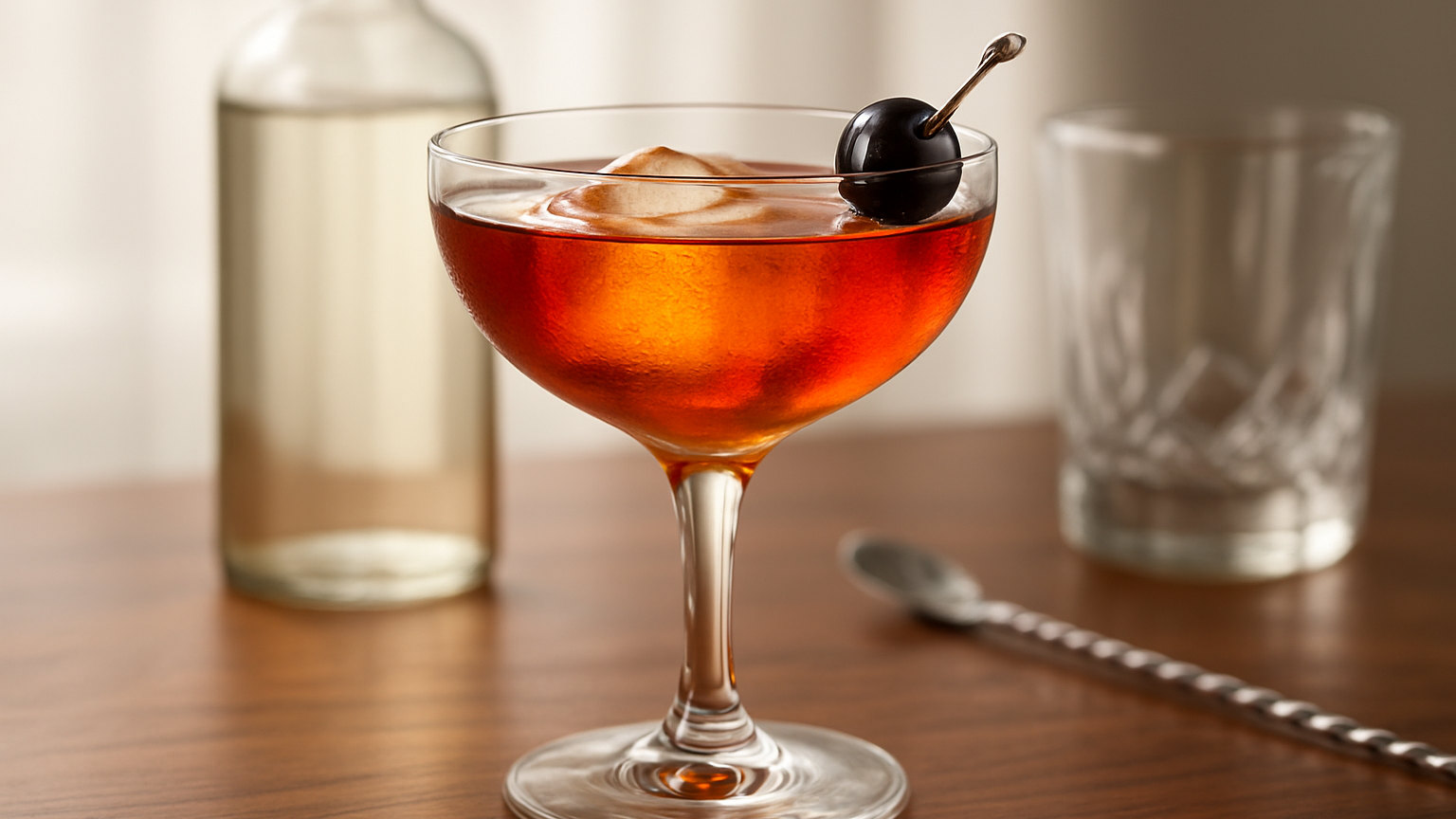
A Manhattan is whiskey, sweet vermouth and bitters, stirred and served up with a cherry. It is a close relative of the old fashioned, but where that drink uses sugar to soften the spirit, the Manhattan uses vermouth. That substitution changes everything, because vermouth is a fresh product with a limited life and it is the ingredient most likely to let the drink down.
What is the classic ratio?
Sixty millilitres of rye whiskey, 30ml of sweet vermouth and two dashes of Angostura bitters. Stir with ice for around thirty seconds and strain into a chilled coupe. Garnish with a good cocktail cherry.
That two to one ratio is the standard. Some prefer three to one for a drier, more whiskey-forward drink, and some go as far as one to one for something rich and almost dessert-like. Start at two to one and adjust from there once you know what you are moving away from.
Why does the vermouth matter more than the whiskey?
Because vermouth is fortified wine, and wine oxidises. An open bottle left in a warm cupboard will taste stewed and vinegary within a month, and it will take the cocktail down with it. Whiskey, by contrast, is stable for years.
This means an average whiskey with fresh vermouth beats an excellent whiskey with tired vermouth every time. Keep the bottle in the fridge from the moment it is opened, and aim to finish it within six to eight weeks. Buying the smaller 375ml bottles rather than the large ones is usually the more economical choice for this reason alone.
Which style of vermouth should you buy?
Italian rosso vermouth is the traditional choice. Within that there is a wide range, from light and lightly bitter to dark, rich and heavily spiced. A richer style suits a Manhattan well because it stands up to whiskey. Lighter styles work better in a negroni where they have less competition.
Should you use rye or bourbon?
Rye is traditional and generally the better choice. Its dry, peppery character contrasts with the sweetness of the vermouth, which is where the drink gets its tension. Bourbon makes a sweeter, rounder Manhattan that some people prefer but which can tip into flatness.
If you use bourbon, consider shifting the ratio drier, to three parts whiskey against one of vermouth, to compensate for the extra sugar.
Why is it stirred and not shaken?
Because there is no citrus juice or egg in it. Shaking a clear, spirit-only drink aerates it and leaves it cloudy with tiny ice fragments, and it changes the texture from silky to slightly rough. Stirring chills and dilutes while keeping the drink clear and heavy in the mouth, which is what this style of cocktail is for.
Thirty seconds of steady stirring with plenty of ice is the target. As with an old fashioned, most people stop too early.
What is a perfect Manhattan?
Perfect here means equal parts of both vermouths rather than perfectly made. A perfect Manhattan uses 60ml whiskey, 15ml sweet vermouth and 15ml dry vermouth. The result is drier and more herbal, sitting somewhere between a Manhattan and a martini.
A dry Manhattan replaces the sweet vermouth entirely with dry, and is usually garnished with a lemon twist rather than a cherry. It is a considerably more austere drink and worth knowing about, though it is much less commonly ordered.
When does the cherry matter?
More than you would expect. A bright red glacé cherry is mostly sugar and artificial colour, and it adds nothing but a sweet syrup slick if it leaks. A proper dark cocktail cherry preserved in its own syrup adds a genuine note of stone fruit and almond as you reach the bottom of the glass.
They cost more and last for months once opened, kept in the fridge. Of all the small upgrades available in home bartending, this is one of the few that changes a drink noticeably.


