
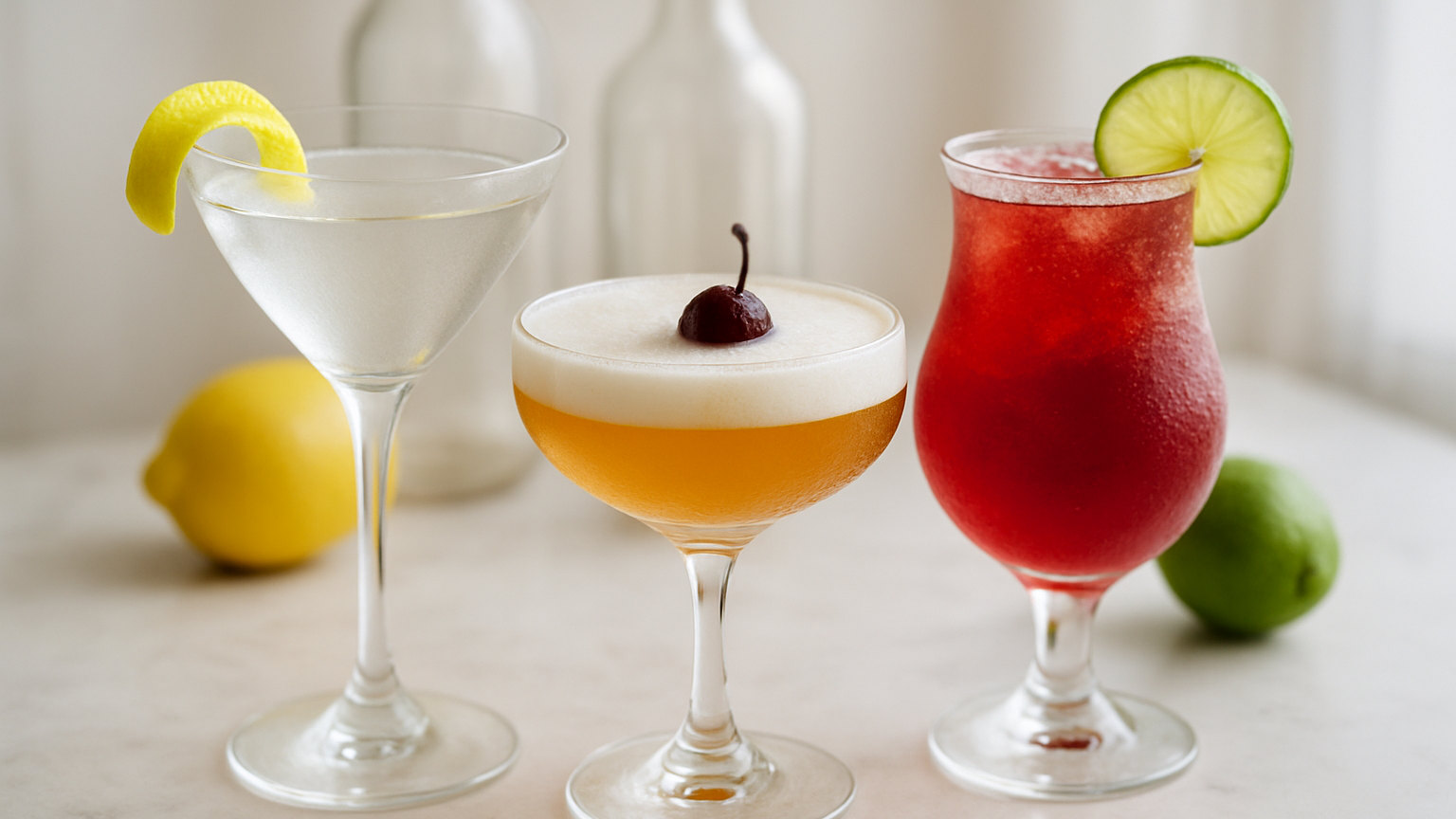
Most home bars are assembled by accident, one bottle at a time, and end up with fifteen half-empty spirits that between them make four drinks. Built deliberately, three bottles will cover a genuinely long list. The trick is choosing spirits that sit at the centre of a family rather than at its edge.
Which three bottles should you choose?
A London dry gin, a bourbon or rye whiskey, and a light white rum. Each anchors a large group of classics, and none of them overlaps much with the others.
Vodka is the obvious omission. It is enormously popular and it makes a small number of good cocktails, but it contributes little flavour of its own, which means it anchors fewer drinks than any of the three above. Add it fourth if you want it.
What else do you need beyond the spirits?
Five cheap supporting items unlock most of the list:
- Sweet vermouth, kept in the fridge.
- Angostura bitters, which lasts years.
- Sugar, for making simple syrup.
- Fresh lemons and limes.
- Soda water in small bottles or cans.
Together these cost less than one mid-range bottle of spirit and they matter more than a fourth spirit would.
Which drinks come from the gin?
A gin and tonic, obviously. Beyond that: a gimlet, which is gin, lime and syrup shaken; a Tom Collins, which is the same plus soda over ice; a French 75 if you have sparkling wine; and a negroni if you add Campari.
A dry martini needs dry vermouth as well, which is a sixth item worth adding if martinis are the reason you are doing this at all.
Which drinks come from the whiskey?
An old fashioned, which needs only sugar and bitters. A whiskey sour, which needs lemon and syrup. A Manhattan, which needs the sweet vermouth and bitters. A highball, which is whiskey and soda over ice and is far better than its simplicity suggests.
That is four distinct drinks from one bottle and three cheap supporting ingredients, which is the best return in the whole bar.
Should it be bourbon or rye?
Rye is drier and more versatile in cocktails, particularly the Manhattan. Bourbon is sweeter and more forgiving, and better if anyone will be drinking it neat. Either works across all four drinks above.
Which drinks come from the rum?
A daiquiri, which is rum, lime and syrup. A mojito, if you add mint and soda. A rum highball. A dark and stormy if you add ginger beer, though that traditionally wants a dark rum rather than a white one.
The daiquiri alone justifies the bottle. It is three ingredients, takes ninety seconds, and it is the drink most often used to judge whether a bar knows what it is doing.
Do the three overlap at all?
Barely, which is the point. Each one produces a family of drinks the others cannot, so every bottle you open is earning its shelf space rather than duplicating a neighbour. That is the test worth applying to everything you add later as well.
What should you buy fourth?
It depends entirely on which of the first three is emptying fastest, which is genuinely the best guide available. Beyond that, the options in rough order of usefulness:
- Orange liqueur. Unlocks the margarita, sidecar and cosmopolitan, and improves several others.
- Campari. Unlocks the negroni, boulevardier and americano.
- Dry vermouth. Unlocks the martini and the perfect Manhattan.
- Tequila. Only worth it if you want margaritas and palomas specifically.
When is buying more bottles a mistake?
When they are bought for one drink you saw in a photograph. A bottle bought for a single cocktail will sit for years, and if it is wine based it will spoil long before you reach the bottom.
The better test is whether a new bottle unlocks at least three drinks you would actually make. Applied consistently, it keeps a small bar useful rather than letting it become a shelf of ornaments.


