
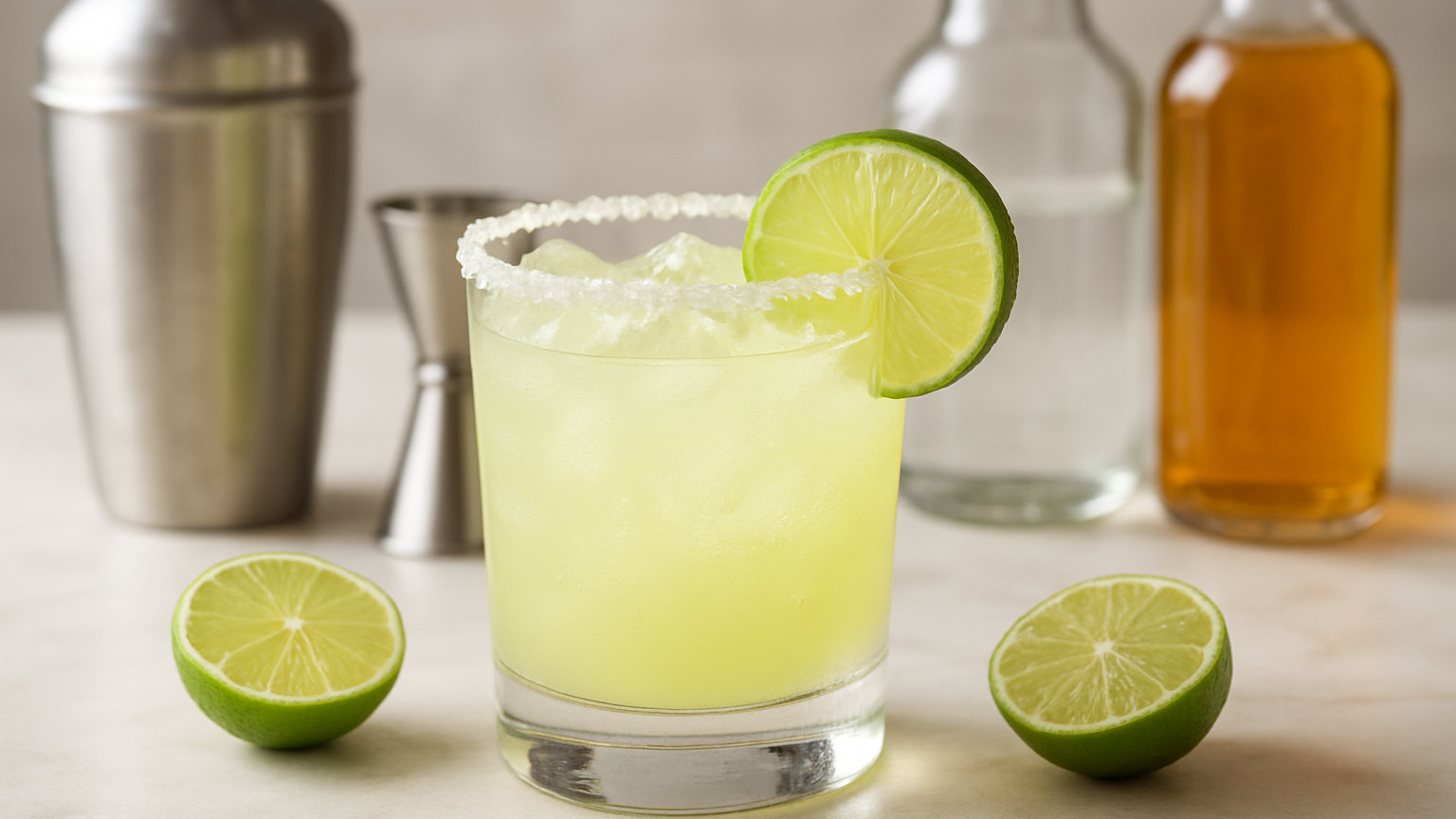
A margarita is tequila, orange liqueur and lime juice, and almost every disagreement about it comes down to the proportions of those three. The version most bars pour today is drier and sharper than the version most people first tasted, which is usually why a homemade one comes as a surprise. Here is where to start and how to move from there.
What is the best margarita ratio?
Fifty millilitres of blanco tequila, 25ml of orange liqueur and 20ml of fresh lime juice, shaken hard with ice and strained. In ounces that is 2oz, 1oz and 0.75oz. This is a tart, spirit-forward drink and it is the modern reference point.
The older, more approachable version runs 50ml tequila, 25ml orange liqueur and 25ml lime, with 5ml of agave syrup added. That extra sweetness rounds off the edges and is closer to what most people expect. Neither is more correct than the other. Make the first, and if it makes you wince, add the syrup.
Which tequila should you buy?
Look for one word on the label: blanco, and one phrase: 100 per cent agave. Anything described as mixto contains up to 49 per cent other sugars and is the single most common cause of a rough margarita and a rougher morning.
Blanco is unaged and bright, which is what you want in a citrus drink. Reposado, aged a few months in oak, makes a rounder and slightly woody margarita that some people prefer. Añejo is aged longer still and is generally wasted in a cocktail with this much lime in it.
Does the orange liqueur really matter?
It matters more than the tequila in a blind tasting, which surprises most people. Orange liqueurs vary enormously in strength and sweetness, from around 20 per cent alcohol and very sweet at the budget end to 40 per cent and much drier at the top.
A dry, high-strength triple sec gives a crisper drink and lets the tequila show. A sweeter curaçao gives a softer one. If you switch brands and the drink suddenly tastes wrong, this is almost always why, and the fix is to adjust the lime or the syrup rather than the tequila.
Can you use bottled lime juice?
You can, but this is the one shortcut that shows. Bottled lime juice is pasteurised, which changes the aroma completely and leaves a flat, slightly metallic note. Fresh limes take about a minute to juice and roughly two limes give you enough for two drinks. It is the highest-value minute in the whole process.
Should you salt the rim?
Salt does real work here. It suppresses bitterness and heightens the perception of sweetness, so a salted rim makes a sharp margarita taste noticeably rounder without changing the recipe at all. It is a genuine flavour tool rather than decoration.
Salt only half the rim so the person drinking it can choose. Rub a lime wedge around the outside edge of the glass, then roll that edge in coarse salt on a plate. Keeping the salt on the outside stops it falling into the drink and making the whole thing progressively saltier.
How do you fix a margarita that tastes wrong?
- Too sharp: add 5ml of agave syrup at a time, or reduce the lime by 5ml.
- Too sweet: increase the lime, or switch to a drier orange liqueur.
- Harsh and burning: the tequila is probably mixto, or you have not shaken long enough.
- Watery: your ice was too small or already wet. Use large, dry cubes.
- Flat and dull: the lime juice was not fresh.
When does frozen work better than on the rocks?
Frozen margaritas need a different balance, because cold suppresses your perception of both sweetness and acidity. A frozen version made to the shaken recipe will taste bland. Increase both the sweetener and the lime by around a quarter, and blend with roughly 150g of ice per drink.
Serve immediately. A blended margarita separates within about ten minutes, and no amount of stirring brings it back together properly.


