
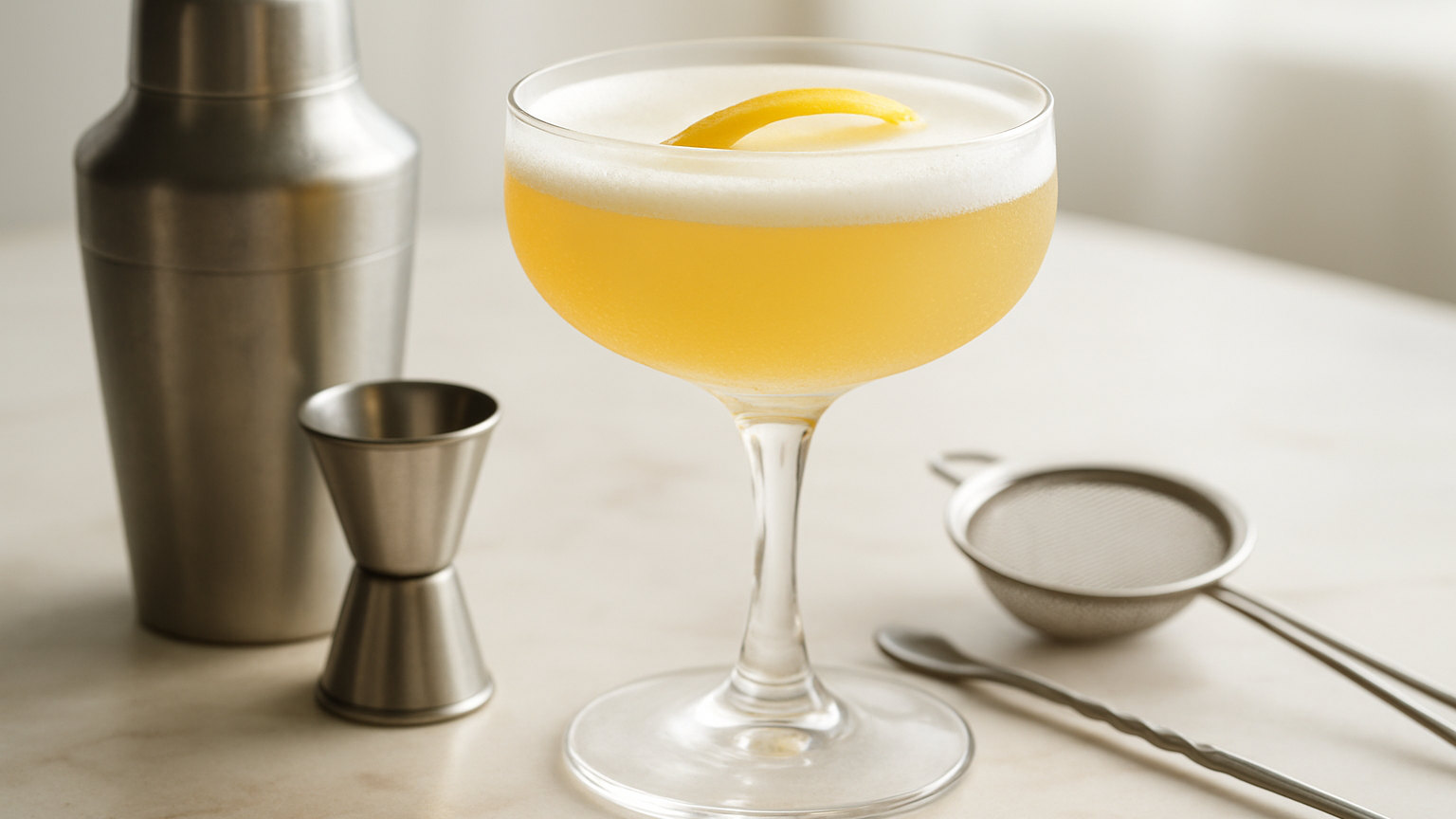
Boxed bar sets are designed to look generous, which means padding the list with items nobody reaches for. Four tools genuinely earn their place, two more are useful, and the rest of what arrives in a gift set will sit in a drawer. Several are already in your kitchen under a different name.
What are the four that matter?
- A jigger or measure. The single most important purchase.
- A shaker. For anything with citrus, egg or cream.
- A strainer. To hold back ice and fruit.
- A bar spoon. For stirring and layering.
With those four you can make essentially every classic cocktail. Everything else is convenience or specialisation.
Why is the jigger the most important?
Because building by eye is where most home drinks go wrong. In a three-ingredient cocktail a 10ml error is a large proportion of the whole, and it is the difference between a balanced daiquiri and a sharp one.
Bar staff who pour free-handed have poured tens of thousands of drinks and are still measured periodically for accuracy. Somebody making four cocktails a month has no chance of developing that calibration, and there is no reason to try.
Which style of jigger?
A Japanese-style double jigger with internal graduation lines, so one tool measures 15, 20, 30, 45 and 60ml. The stubby two-sided kind that only measures its two extremes means constant mental arithmetic. Graduations cost almost nothing extra and remove that entirely.
What can the kitchen replace?
- Muddler: the handle of a wooden spoon, or the end of a rolling pin.
- Fine strainer: a small kitchen sieve.
- Mixing glass: a pint glass or a large tumbler.
- Channel knife: a vegetable peeler, which is better anyway.
- Ice crusher: a tea towel and a rolling pin.
- Shaker, at a pinch: a large jam jar with a tight lid.
The jam jar works and it leaks slightly, does not chill as fast as metal and cannot be opened one-handed. It is a perfectly good way to find out whether you shake enough drinks to justify buying a shaker.
What are the two useful extras?
A fine mesh strainer for double straining, which keeps ice shards and citrus pulp out of anything served up. And a small chopping board with a paring knife, kept with the bar rather than in the kitchen, so cutting a twist does not involve a trip.
Both are cheap and both remove friction, which is what actually determines whether drinks get made on a weeknight.
Which tools do people buy and never use?
- Cocktail sticks and fruit forks. Almost entirely decorative.
- Ice tongs. A spoon does it.
- Bottle pourers. Useful in a bar with high turnover, and they oxidise a bottle faster at home.
- Novelty ice moulds. Spheres melt no slower than a large cube.
- Cocktail books bundled with the set. Usually a list of recipes with no measures worth trusting.
What should you buy first if buying one thing?
The jigger, without hesitation. It costs less than a bottle of tonic and it improves every drink you make from that point on, including the ones you were already making.
Does material matter?
Stainless steel for anything that touches a drink. It does not corrode, does not hold flavours and survives being dropped. Copper-plated tools look attractive and the plating wears through in time, exposing the base metal.
Avoid anything with a coating that could chip, and avoid unlined copper for anything acidic, since copper reacts with citrus and should not be in prolonged contact with a drink.
Should you buy a set or individual items?
Individually, from a catering supplier rather than a homeware shop. The same steel tins are frequently sold at three times the price in a printed box, and the money in a set goes into the item count rather than into the four tools you will use.
Four good items cost roughly what a mid-range fourteen-piece set does, and all four get used.
How do you know when to add something?
When you notice yourself improvising around a gap more than once or twice. If the jam jar is annoying you weekly, buy a shaker. If you have never muddled anything, do not buy a muddler.


