
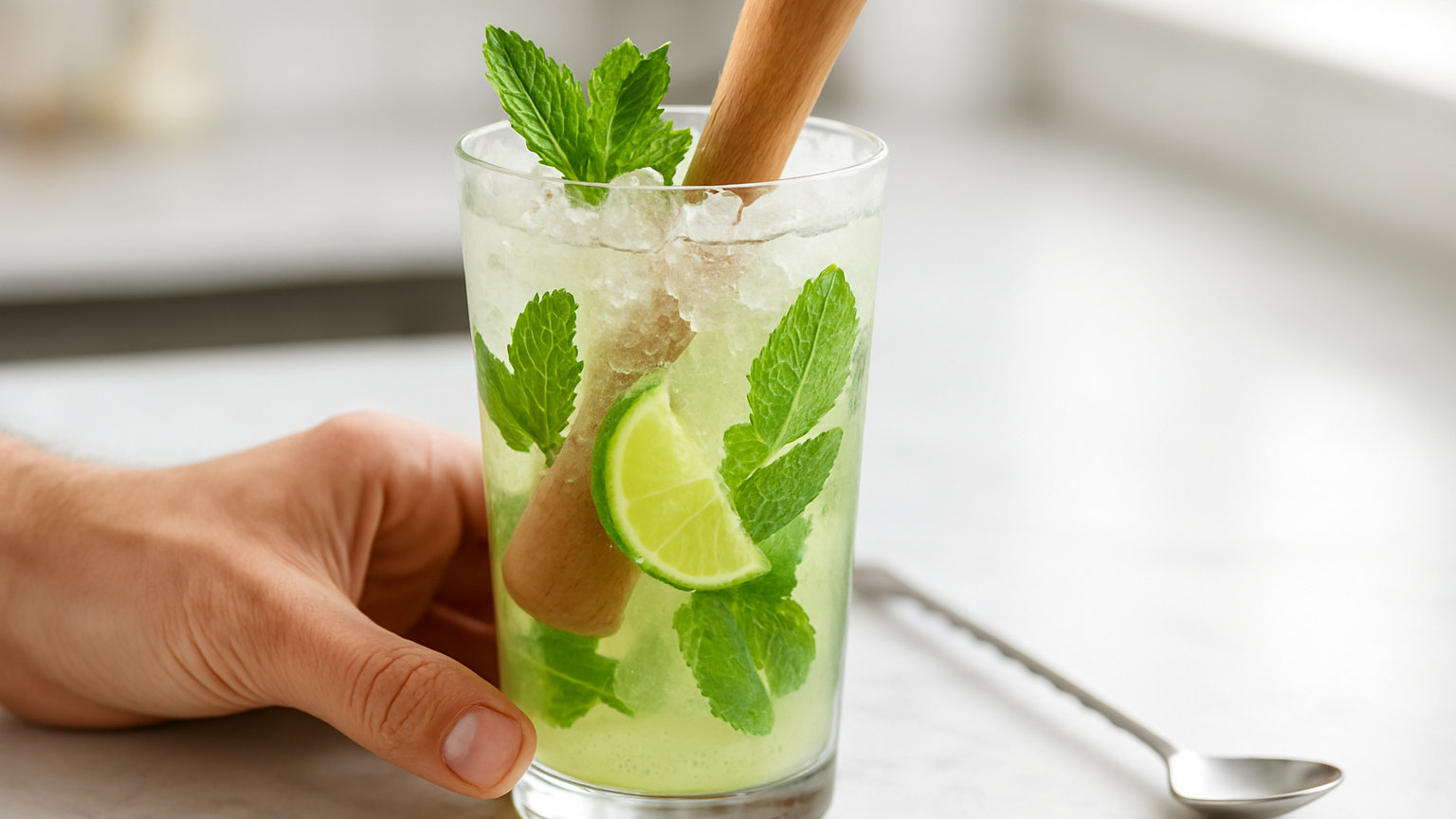
A muddler is a short pestle used to press ingredients in the bottom of a glass or shaker. The word suggests mashing, which is where most people go wrong. For herbs in particular, the correct action is a gentle press, and grinding produces exactly the flavours you are trying to avoid.
What does muddling actually do?
It ruptures cell walls to release juice and essential oils. How much force that needs depends entirely on what you are muddling, and the difference between a herb and a lime wedge is large.
- Herbs: four or five gentle presses. Oils sit near the surface.
- Soft fruit: firm pressing until broken down.
- Citrus wedges: firm pressing to release juice and some peel oil.
- Sugar cubes with bitters: grinding, until dissolved.
Why does over-muddling herbs go wrong?
Because mint and basil hold chlorophyll and tannins in the leaf structure, below the surface layer where the aromatic oils are. Gentle pressure releases the oils. Grinding releases everything, and chlorophyll is bitter and grassy.
The visual test is reliable. Correctly muddled mint stays green and mostly intact. Over-muddled mint is dark, shredded and stuck to the sides of the glass, and by that point the bitterness is in the drink and cannot be removed.
How gentle is gentle?
Press down and give a slight quarter turn, four or five times. You are bruising the surface, not making a paste. It should take about five seconds.
What about citrus?
Wedges can take firm pressure, since you want the juice. Be aware that heavy pressing also extracts oil and some bitterness from the pith, which suits a caipirinha and does not suit everything.
If a drink calling for muddled lime tastes harsh, press more gently and add a little more juice separately.
Which muddler should you buy?
- Unfinished hardwood. Traditional, good grip, needs drying properly and never goes in a dishwasher.
- Varnished wood. Avoid. The varnish chips into drinks over time.
- Stainless steel. Hygienic and easy to clean.
- Steel with a toothed nylon head. Effective on fruit and too aggressive for herbs.
The toothed head is the common one in gift sets and it is the worst choice for mojitos, since the teeth shred leaves however carefully you press.
What length do you need?
Around 20 to 25cm, long enough to reach the bottom of a tall glass with your hand still above the rim. A short muddler means putting your fist inside the glass, which is awkward and unhygienic when serving others.
What can you use instead?
The handle of a wooden spoon is the standard substitute and it works well, particularly for herbs, since the smooth end presses rather than tears. The end of a rolling pin works for fruit.
Neither is a compromise for most purposes. This is one of the tools least worth buying early.
Which drinks need muddling at all?
Fewer than people think. The mojito, the caipirinha, the old fashioned made in the traditional way, the mint julep and various smashes.
Many recipes that call for muddling can be made better with a syrup instead. A mint syrup made ahead gives a mojito with no bruising risk and identical results across ten drinks, which is why it is the sensible approach for a party.
How do you clean it?
Immediately, by hand. Wooden muddlers absorb flavours and should be rinsed and dried standing up rather than left wet. Mint and lime residue dries hard, and an untreated wooden head that has held it for a week will taint the next drink.
Should you muddle in the glass or the shaker?
In whichever vessel the drink is built in. A mojito is muddled in the serving glass; a smash is muddled in the shaker tin before the ice goes in.
Never muddle in a thin or fine glass. The pressure needed for fruit is enough to crack thin walls, and a cracked glass in a drink is a genuine hazard.


