
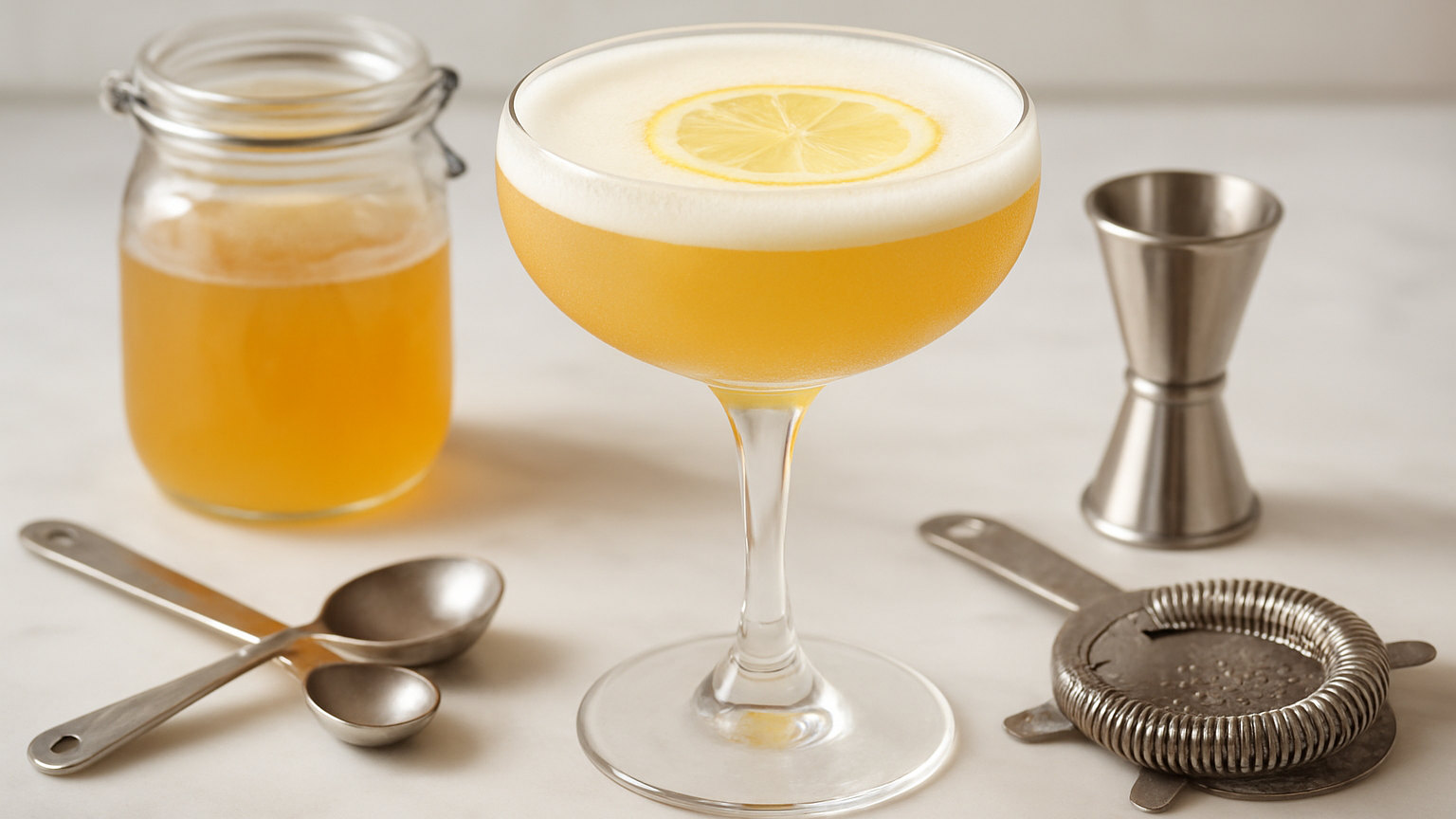
A full bar tool set is a reasonable purchase for someone who already knows they make cocktails regularly, and a poor first step for someone finding out. Almost everything in the set has a kitchen equivalent good enough to work with while you decide.
What replaces what?
- Shaker: a large jam jar with a tight-fitting lid.
- Fine strainer: a small tea strainer or kitchen sieve.
- Muddler: the handle of a wooden spoon, or the end of a rolling pin.
- Mixing glass: a pint glass or a large straight tumbler.
- Bar spoon: a chopstick, or a long-handled teaspoon.
- Channel knife: a vegetable peeler.
- Ice crusher: a tea towel and a rolling pin.
- Citrus juicer: a fork twisted in a halved lemon.
Where does the jam jar fall short?
Three ways. Glass conducts heat poorly, so it chills more slowly than metal and you cannot feel when the drink is ready. The lid seals adequately rather than reliably, so a hard shake sometimes leaks. And it cannot be opened one-handed.
It works. A daiquiri shaken in a jam jar is a good daiquiri. It is simply slower and slightly messier, which is a fair trade while you find out how often you shake anything.
Which jar should you use?
A large one, around 700ml, with a metal screw lid rather than a clip top. Enough headroom for ice to travel is what makes a shake work, and a small jar just rattles.
Why is a vegetable peeler better than a channel knife?
Because it takes a wide strip with minimal pith in a single stroke. A channel knife cuts a narrow spiral that looks decorative and holds less oil, which is the actual point of a twist.
This is one of the few cases where the kitchen tool is genuinely the better choice rather than an acceptable substitute.
What does not substitute well?
- A Hawthorne strainer. Nothing in a kitchen seals against the inside wall of a shaker tin. Pouring through a sieve alone is slow and spills.
- A jigger. Kitchen measuring spoons are calibrated for 5ml and 15ml and stop there, which covers none of the measures that matter most.
Those two are the ones worth buying, and between them they cost less than a bottle of tonic.
Can you measure with kitchen equipment?
Partially. A metric tablespoon is 15ml and a teaspoon is 5ml, so 45ml is three tablespoons and 60ml is four. That is workable and tedious, and it introduces error across four separate pours.
A small measuring jug with graduations from 25ml is a better stopgap, though the wide base makes small quantities hard to read accurately.
What about crushing ice?
The tea towel method is not a compromise at all. Cubes in a folded clean tea towel, hit with a rolling pin, produce uneven fragments that work better than uniform machine crush, because the larger pieces keep the bottom of a tall drink from going watery.
How do you juice citrus without a juicer?
Halve the fruit, hold it cut side up in your palm, and squeeze while twisting a fork inside it. Cut side up means the juice runs down your fingers and the pips mostly stay in the fruit.
Roll the fruit firmly on a worktop first, which breaks the internal membranes and increases the yield noticeably. A cheap hand press is worth buying if you make citrus drinks weekly, and it is not needed to start.
What should you actually buy first?
A jigger and a Hawthorne strainer. Use the kitchen for everything else for a couple of months, then buy a shaker if you find yourself reaching for the jam jar often enough to be annoyed by it.
When should you stop improvising?
When a substitution is costing you a drink you would otherwise make. If the jam jar leaking has put you off shaking anything for a month, the shaker has paid for itself before you buy it.


