
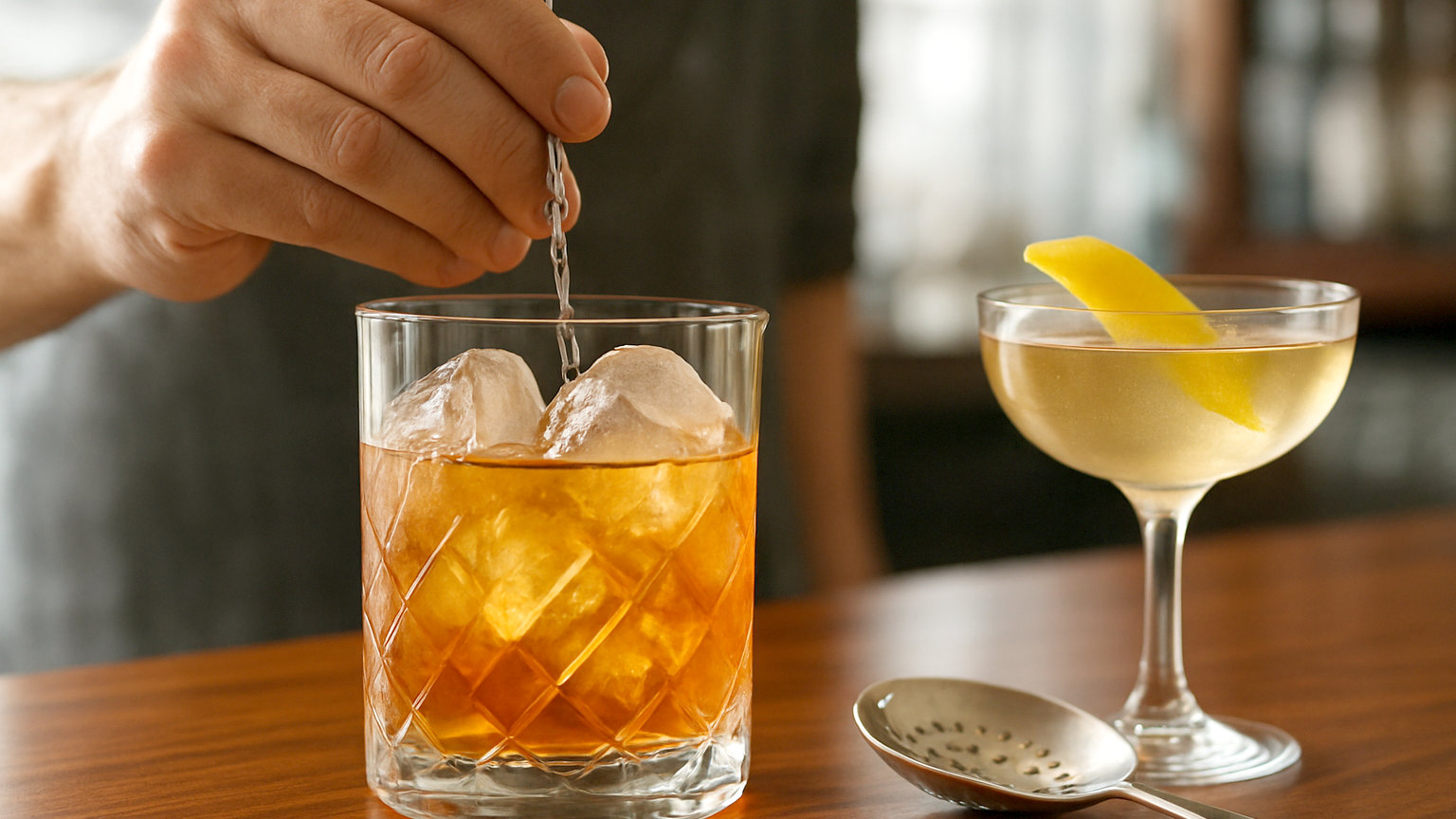
A mixing glass is a heavy, straight-sided vessel used for stirring spirit-forward drinks. It looks like an ornament and it is not, though a pint glass will do the job perfectly well. What matters is the shape and the volume rather than the cut crystal.
Which drinks need one?
Anything stirred rather than shaken, which means anything without citrus juice, egg white, cream or fruit purée. Martinis, Manhattans, negronis, boulevardiers and old fashioneds all qualify.
The rule is simple. If every ingredient is clear and spirit-based, stir it. If anything cloudy or thick goes in, shake it.
Why not just stir in a shaker tin?
You can, and two things suffer. A tin is opaque, so you cannot see how the ice is moving or judge dilution, and the tapered shape makes it harder for the ice to rotate as a mass.
A straight-sided glass lets the ice turn cleanly around the wall, which is what the spoon technique depends on. It also lets you watch the drink chill, and frost forming on the outside is the clearest signal that it is ready.
Does the glass need to be heavy?
It helps. Weight keeps the glass stable while you stir with one hand, and thick walls insulate slightly, so the drink chills from the ice rather than from the surrounding room. A thin glass tips more easily and warms faster.
How much ice should you use?
Fill it, roughly two thirds to three quarters. Sparse ice means each cube warms quickly and dilutes fast, which produces a watery drink even though it seems as though less ice would water it less.
Use large, dry cubes straight from a cold freezer. Wet ice that has been sitting out has already started melting and adds dilution before you have begun.
How long should you stir?
Around thirty seconds, or until the outside of the glass is uncomfortably cold to hold. That is the reliable test and it works regardless of how much ice you used.
A finished stirred drink should be around twenty per cent water by volume. Most people stop after ten seconds because it feels like long enough, and the result is hot and unbalanced. Counting helps more than judging by eye.
What is the correct technique?
- Add the ingredients, then the ice.
- Hold the bar spoon loosely between the middle and ring fingers.
- Rest the back of the spoon bowl against the inside wall.
- Move it around the wall so the ice rotates as a mass.
- Keep the bowl in contact with the glass throughout.
Done properly it is almost silent. Rattling means the spoon is going through the ice rather than around it, which chips fragments into the drink and over-dilutes it.
Should you chill the glass first?
If you can. A warm mixing glass absorbs cold from the ice before the drink starts benefiting from it. Filling it with ice and water for a minute, then pouring that off, is enough.
The serving glass matters more. A cocktail served up has no ice keeping it cold, so five minutes in the freezer makes a genuine difference to how the drink holds over ten minutes of drinking.
What can you use instead?
A pint glass is the closest substitute and costs nothing. A large straight-sided tumbler works. A measuring jug works and is awkward to pour from cleanly.
What matters is straight sides, enough volume for the drink plus plenty of ice, and enough weight to stay put. A dedicated mixing glass is a pleasant thing to own and it is not doing anything a pint glass cannot.
How do you pour from it?
With a julep or Hawthorne strainer held against the rim, and a steady controlled pour. A mixing glass with a spout pours more cleanly than a pint glass, which is the one practical advantage of buying a proper one.
What size should it be?
Around 500 to 700ml, which holds a single drink with plenty of ice and stretches to two. Much smaller and there is no room for the ice to rotate, which is the whole point of the shape.


