
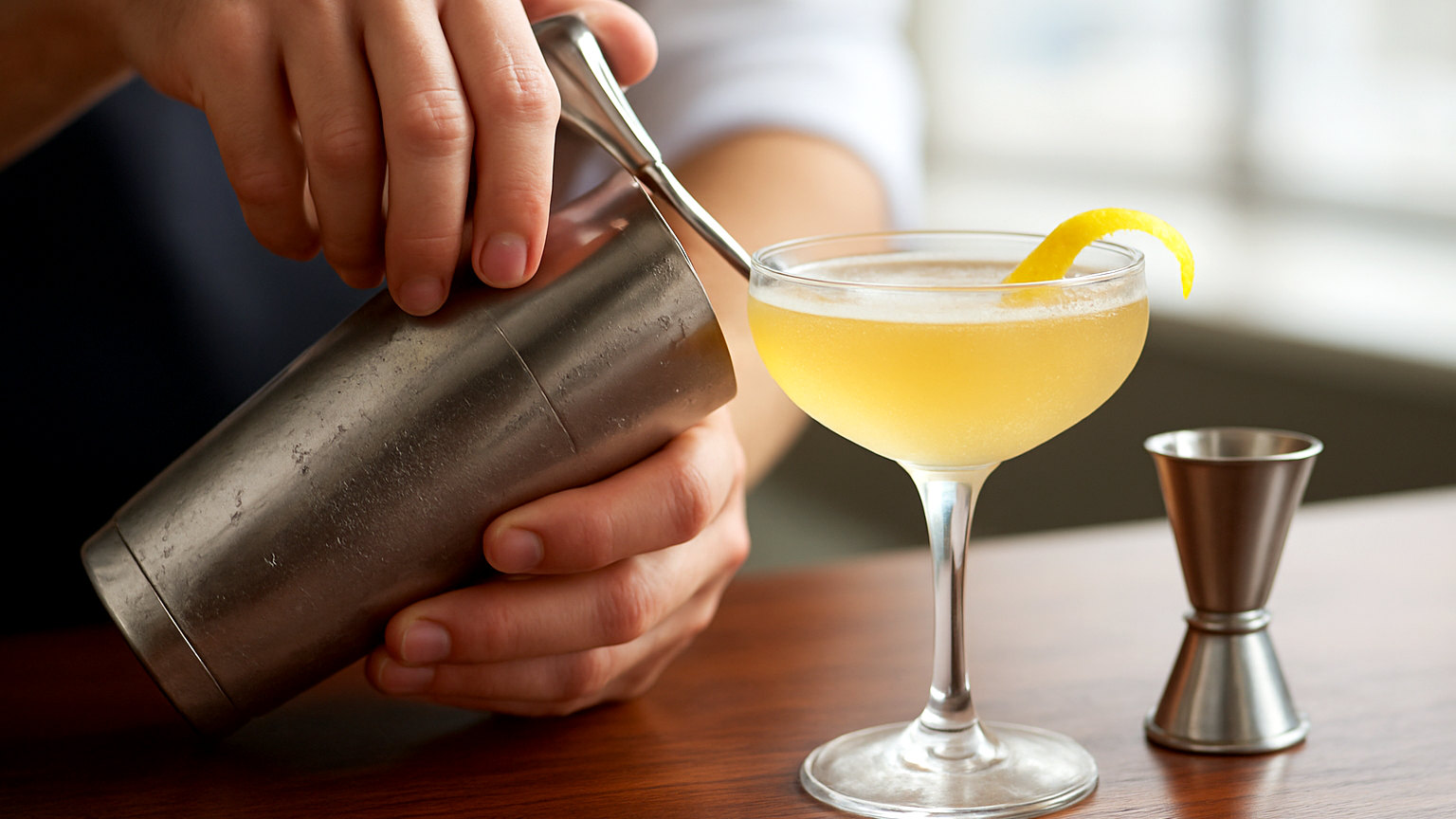
A Boston shaker that will not open is the most common frustration in home bartending, and it looks like a design fault. It is not. The seal is created by physics and released the same way, and once you know where to tap, it opens every time.
Why does it stick in the first place?
Two things happen during a shake. The contents get very cold, which makes the air inside contract and creates a partial vacuum. And the metal of both tins contracts slightly, tightening the join.
That combination is what makes the seal reliable during the shake, so a shaker that never stuck would be a shaker that leaked. The stick is the design working.
Where do you tap it?
Find the seam first. Because the tins are placed slightly off-centre, there is a point where the gap between them is widest and a point directly opposite where they are tightest.
Hold the shaker with the join facing you and turn it slowly. You will see one side where the smaller tin sits closer to the wall of the larger one. That is the tight side, and the wide side opposite it is where the seal breaks most easily.
Grip the larger tin firmly in one hand and strike the wide side of the rim once with the heel of your other hand. Not hard. A firm, confident tap is enough, and the seal releases with an audible hiss.
What if it does not release?
Rotate the shaker slightly and tap again. Most failures are hitting the wrong point rather than not hitting hard enough. Increasing the force is the usual instinct and it rarely helps.
What else can you try?
- Warm the outer tin briefly under a running tap. Warming expands the metal and relieves the vacuum.
- Squeeze the larger tin gently to distort it slightly and break the seal.
- Tap the rim on the edge of a worktop, though this dents tins over time.
What should you not do?
Do not prise the tins apart with a knife or a spoon handle. It bends the rim, and a bent rim will never seal properly again, so you turn a stuck shaker into a leaking one permanently.
Do not hit it against a hard surface with force. Aluminium tins dent easily and dents cause the same problem.
Do not shake it harder to loosen it. Nothing about that helps and the contents are under slight pressure.
How do you seal it properly to begin with?
Place the smaller tin on top at a slight angle rather than straight down, off-centre by about a centimetre, and strike the top once firmly with the heel of your hand.
Two tins placed perfectly square rarely seal at all and will separate mid-shake, which is a considerably worse outcome than a stuck shaker. The angle is what creates both the seal and the seam you use to open it.
Does the type of tin matter?
Weighted bottoms and thicker gauge metal both hold their shape better and stick less. Very thin cheap tins deform slightly with every seal and become unreliable within a year.
A glass-and-tin Boston sticks less than tin on tin, because glass does not contract in the same way. It also breaks, chills more slowly and is heavier, which is why most bars moved away from it.
What about cobbler shakers?
They stick worse and there is no seam to exploit. The cap seizes first, usually leaving the lid attached, and the only reliable fix is running warm water over the join.
It is the main practical argument for a Boston, alongside the built-in strainer clogging with pulp and mint.
Does it get easier with practice?
Considerably. After a dozen drinks, finding the seam becomes automatic and the tap is a reflex rather than a search. Most people who give up on a Boston shaker do so in the first week, before that point.


