
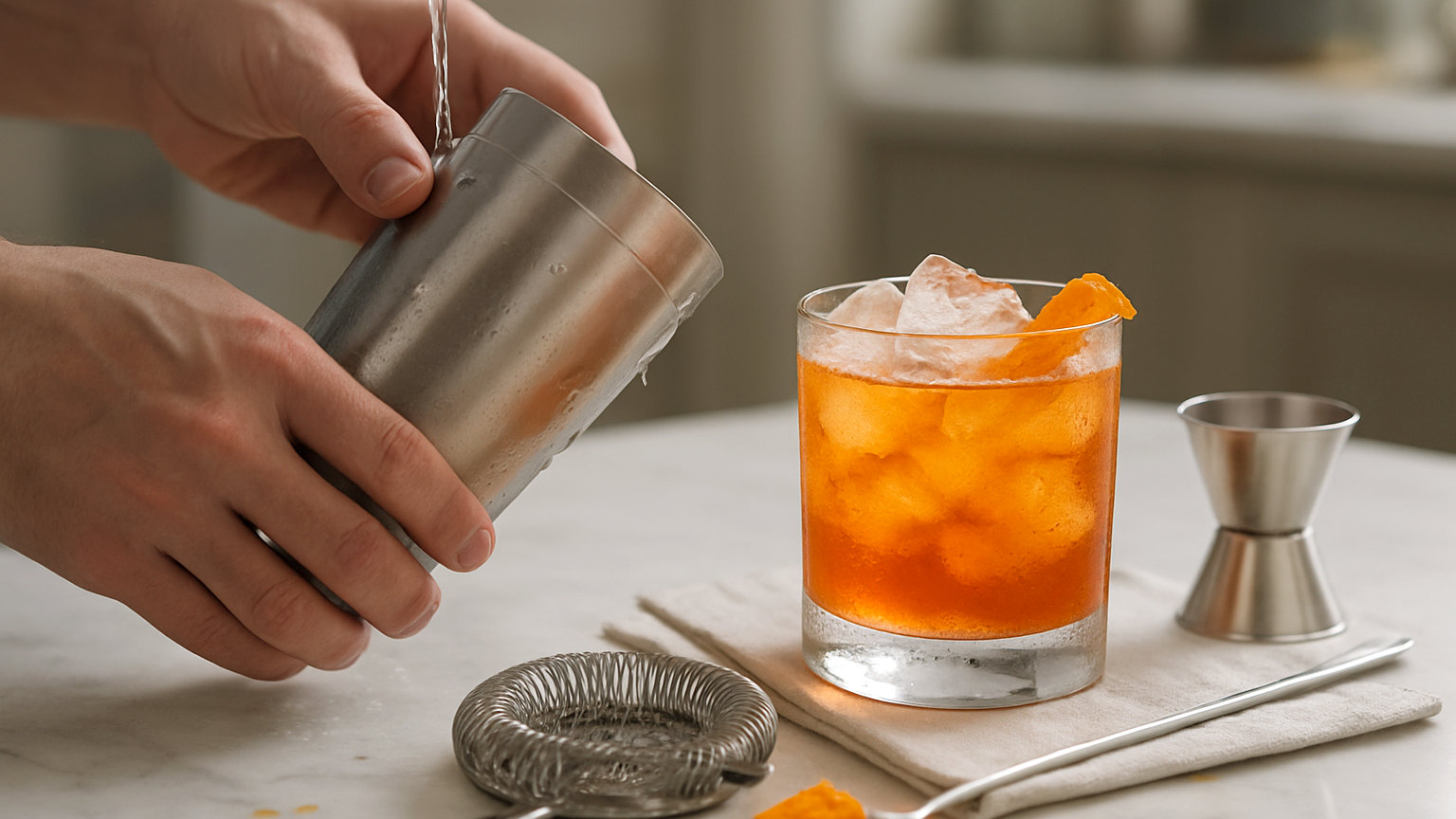
Bar tools spend their lives in contact with sugar, acid and alcohol, all of which leave residue that sets. The single habit that matters is rinsing immediately rather than at the end of the evening, and most of the rest is consequence.
Why rinse straight away?
Because dried citrus and syrup form a hard film that resists rinsing and needs scrubbing. A shaker rinsed within a minute of use takes five seconds. The same shaker left overnight takes a scourer and hot water.
It also matters for flavour. A shaker that held a mint drink and was left until morning will carry that aroma into whatever goes in next, and metal holds it more than people expect.
Can bar tools go in a dishwasher?
Most stainless steel survives it, and there are reasons not to. Dishwasher detergent is strongly alkaline and leaves a film that kills the head on anything foamed, which is noticeable in a whiskey sour.
Heat and detergent also degrade any coating. Copper-plated and gold-coloured tools will lose their finish within a few cycles, and once the plating goes the base metal underneath is exposed.
Wooden muddlers must never go in. They absorb water, swell, crack and eventually split.
What is the alternative?
Hot water and a small amount of unscented washing up liquid, rinsed thoroughly. Dry with a lint-free cloth rather than leaving to air dry, since hard water leaves spots on steel.
How do you clean a Hawthorne strainer?
The coiled spring is the awkward part, since pulp and mint lodge inside the coils and rinsing does not reach them. On most models the spring unhooks and lifts off entirely, which makes a proper wash straightforward.
If it does not detach, run it under a hot tap while flexing the spring with your fingers, which opens the coils and flushes them. A washing up brush helps.
Left uncleaned, the spring accumulates a sticky residue that traps everything and eventually smells.
How should you treat a wooden muddler?
Hand wash in warm water without soaking, and stand it head up to dry rather than laying it down. Never leave it wet.
Unfinished hardwood absorbs flavour over time. Occasional treatment with food-safe mineral oil keeps it sealed and prevents cracking. Varnished muddlers should be avoided entirely, since the varnish chips into drinks.
If a wooden head starts smelling of mint or lime permanently, it is time to replace it. They are inexpensive.
What causes rust on steel tools?
Stainless steel resists rust rather than being immune to it. Prolonged contact with salt or acid, and being left wet, both cause pitting and spotting over time.
Dry everything before putting it away. A shaker stored with a few drops of water in the bottom will develop marks within months.
How should tools be stored?
- Shaker tins separated rather than nested, so air circulates.
- Muddler upright, head up.
- Jiggers and spoons in a container rather than loose in a drawer.
- Everything dry before it goes away.
Nested shaker tins trap moisture between them and stick, which is a slightly absurd way to end up with a shaker you cannot open before you have used it.
What about glassware?
Hand wash where possible, since dishwasher film dulls the surface and kills foam. Store upright rather than inverted, because a glass rim down on a wooden shelf traps stale air and picks up the smell of the wood.
How often does anything need replacing?
Steel tools should last decades. Wooden muddlers need replacing every few years depending on use. Shaker tins that have been dented or prised apart with a knife will never seal properly again and are the item most often ruined by mishandling rather than wear.
What about anything that held dairy or egg?
Wash it immediately and thoroughly with hot water and detergent rather than a quick rinse. Egg white and cream residue is the one thing on this list that becomes a hygiene question rather than a flavour one.


