
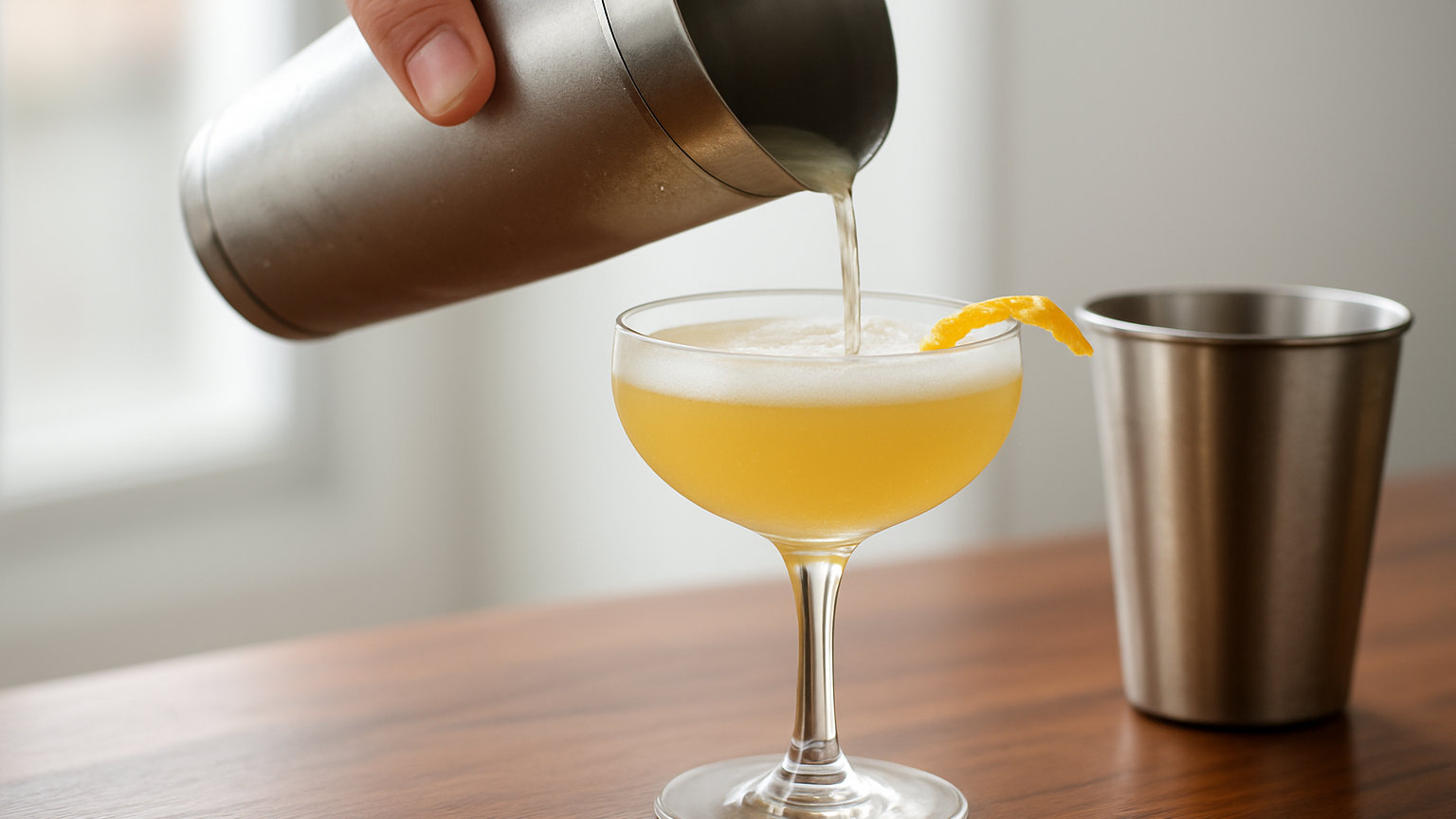
Shakers look interchangeable and behave very differently. A thin, undersized one will leak, stick and dent within a year. The features that matter are checkable by hand, and none of them relates to the finish or the branding.
What size should it be?
A large tin of around 700ml, paired with a smaller tin of 500ml or so. That holds a single drink with plenty of ice and stretches to two at a push.
Ice needs room to travel from end to end, and that movement is what chills and aerates. A small shaker of 350ml simply rattles, and a drink shaken in one is under-chilled and under-diluted no matter how hard you work.
What material?
Stainless steel throughout. It does not corrode, holds no flavour, chills fast and survives being dropped.
Avoid coated or plated finishes. Copper-plated and gold-coloured shakers lose their coating within a few years of washing, and once the plating wears through the base metal is exposed.
Glass halves for a Boston work and are heavier, break, and chill more slowly, which makes it harder to judge when the shake is done.
Does weight matter?
Considerably. A weighted base gives the shaker stability on a worktop and keeps its shape when you strike the seal. Very light tins deform slightly every time they are sealed, and within a year they no longer fit each other properly.
Pick one up before buying if you can. It should feel substantial rather than tinny.
How do you test one in a shop?
- Seal it. Place the smaller tin at a slight angle and tap. It should seal firmly with one tap.
- Open it. Tap the wide side of the seam. It should release cleanly.
- Check the rim. Run a finger round it. Any waviness means poor tolerances.
- Squeeze the wall. If it flexes easily, the gauge is too thin.
Which type should you buy?
A tin-on-tin Boston for most people. It seals reliably, opens with a tap, chills fastest, and there is nothing to clog.
A cobbler is more forgiving to use and needs no separate strainer, and the built-in strainer clogs with pulp and mint, and the cap seizes. It is a reasonable choice for someone making two drinks a month.
A French shaker sits between the two and looks better than either.
What about a shaker with a built-in measure?
The cap of a cobbler shaker is sometimes sold as a measure, and it is usually an unmarked cup of unclear volume. Use a proper jigger. A shaker cap is not calibrated and varies between models.
How many should you own?
One, unless you regularly make drinks for six people. A second large tin is more useful than a second complete shaker, since it lets you shake two drinks at once with the same smaller tin.
What ruins a shaker?
Prising the tins apart with a knife or spoon handle, which bends the rim permanently. Once bent, it will not seal and the shaker leaks for the rest of its life.
Hitting it hard against a worktop edge dents it with the same result. Learning where the seam is and tapping there takes ten seconds and prevents both.
What should you spend?
Mid-range. The cheapest tins are too thin to last and the most expensive are paying for finish rather than function. A solid unbranded steel Boston from a catering supplier is often better made than a boxed set costing three times as much.
Does it need a matching strainer?
Not matching, but fitting. Hawthorne strainers are sized for standard tins and a very wide or narrow shaker may leave a gap on one side, which lets ice through. Buying both together, or testing the fit, avoids it.
How long should one last?
Decades, if it is a decent gauge and never prised open with a knife. Steel does not wear out. Shakers are almost always retired because the rim has been bent or dented, which is a handling problem rather than a wear problem.


