
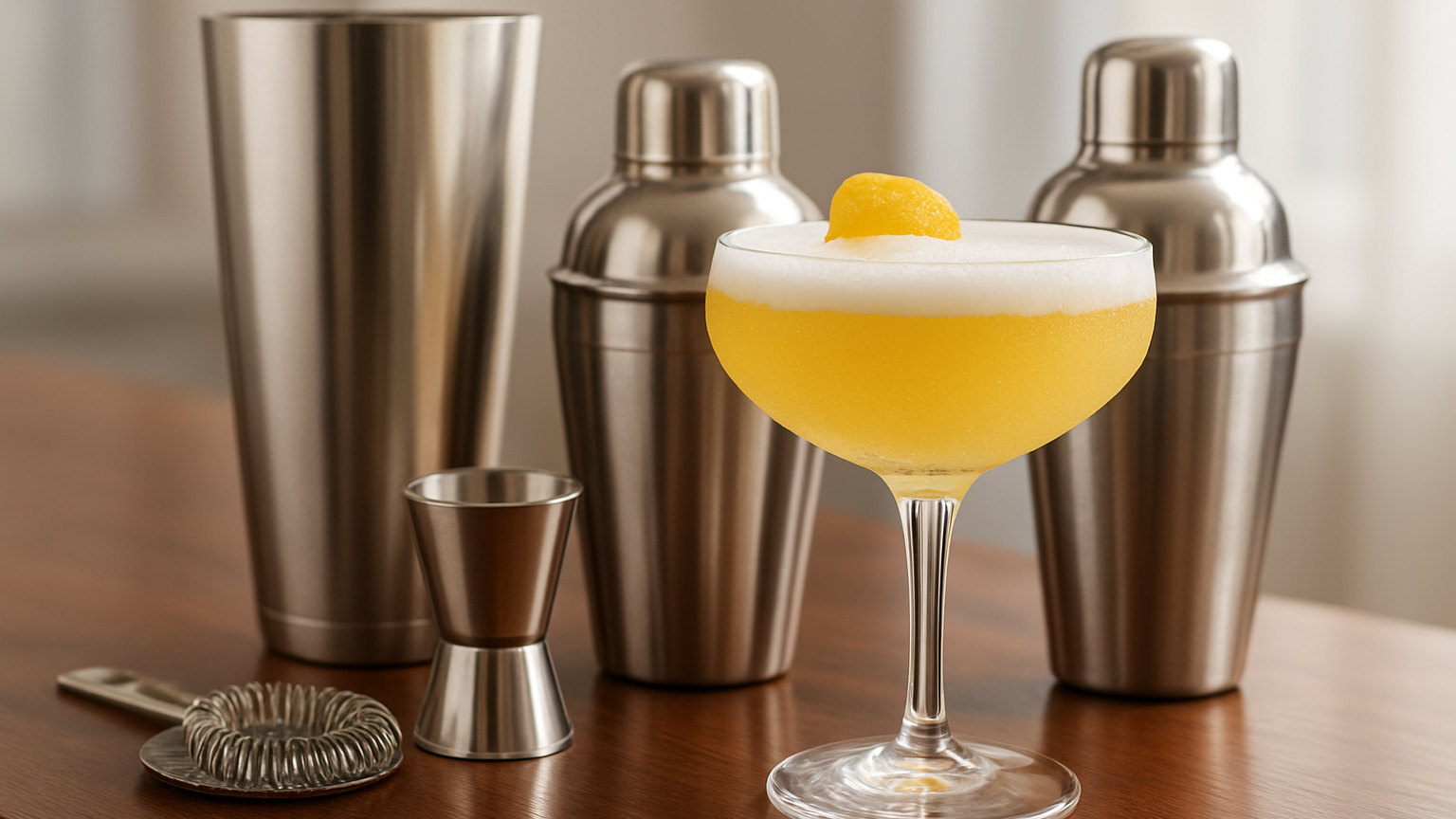
There are three common shaker designs and they behave quite differently. The one that comes in most gift sets is the one bar staff are least likely to use, and understanding why explains a lot about what goes wrong with home shaking.
What are the three types?
- Cobbler. Three pieces: a tin, a lid with a built-in strainer, and a cap.
- Boston. Two pieces: a large tin and either a smaller tin or a pint glass.
- French or Parisian. Two pieces, both metal, with a rounded profile and no built-in strainer.
Why do professionals avoid the cobbler?
Two practical reasons. The built-in strainer has small holes that clog with fruit pulp, mint and ice shards, which slows pouring and traps material you then have to clean out.
More significantly, the cap and lid seize. Metal contracts as the contents chill, and a cobbler that sealed easily at room temperature can be genuinely difficult to open after a hard shake. The cap is the worst offender, and it usually comes off leaving the lid stuck.
The design is not without merit. It is the simplest to use, needs no separate strainer, and for someone making two drinks a month it is entirely adequate.
What is a tin on tin?
A Boston shaker using two metal tins rather than a tin and a glass. It is the standard behind most bars: lighter, unbreakable, chills faster than glass and seals more reliably.
Why does a Boston chill faster?
Because metal conducts heat far better than glass. A tin-on-tin shaker transfers the cold outwards quickly, so you can feel the frost forming and judge when the drink is ready by touch.
A glass half also makes it hard to tell when the shake is done, since the glass insulates and stays comparatively warm. The traditional glass-and-tin Boston is a compromise that exists mostly because glass halves were once cheaper.
How do you seal a Boston?
Fill the larger tin with ice and ingredients, place the smaller tin on top at a slight angle rather than straight down, and strike the top firmly once with the heel of your hand.
The angle matters. Two tins placed perfectly square rarely seal, and they will separate mid-shake. Off-centre by about a centimetre is right.
Which one should you buy?
A tin-on-tin Boston, if you are buying anything. It seals reliably, opens with a tap, chills fastest and costs less than most cobblers because there is less machining involved.
It does require a separate strainer, usually a Hawthorne, which is an extra item and one you will want anyway for double straining.
What about the French shaker?
Two metal pieces with an elegant rounded profile and no built-in strainer. It looks better than either alternative and sits between them in practice: better sealing than a cobbler, more prone to sticking than a Boston.
It is a reasonable choice if appearance matters and you are shaking a few drinks at a time rather than working through a party.
Does size matter?
Yes. A shaker that is too small leaves no room for the ice to move, and the movement is what does the chilling and aeration. A 700ml large tin comfortably holds a single drink with plenty of ice and can stretch to two.
Small novelty shakers around 350ml are the wrong tool for anything. If the contents cannot travel from end to end, you are stirring inefficiently rather than shaking.
How do you seal and open one safely?
Seal by placing the smaller tin at a slight angle, off-centre by about a centimetre, and striking the top firmly once with the heel of your hand. To open, find the widest point of the seam and tap there.
Never prise the tins apart with a knife or spoon handle. It bends the rim permanently, and a bent rim will not seal again, which turns a stuck shaker into a leaking one for good.
What should you look for when buying?
Weight and wall thickness. A tin you can flex easily between finger and thumb is too thin, and it will deform slightly every time you seal it until the two halves no longer fit each other.


